
Last updated September 21, 2026
Full 25-point door and opener safety check with every visit - springs, cables, rollers, tracks, and your LiftMaster or Chamberlain opener included
You get a price before we start. It does not change when the truck arrives.
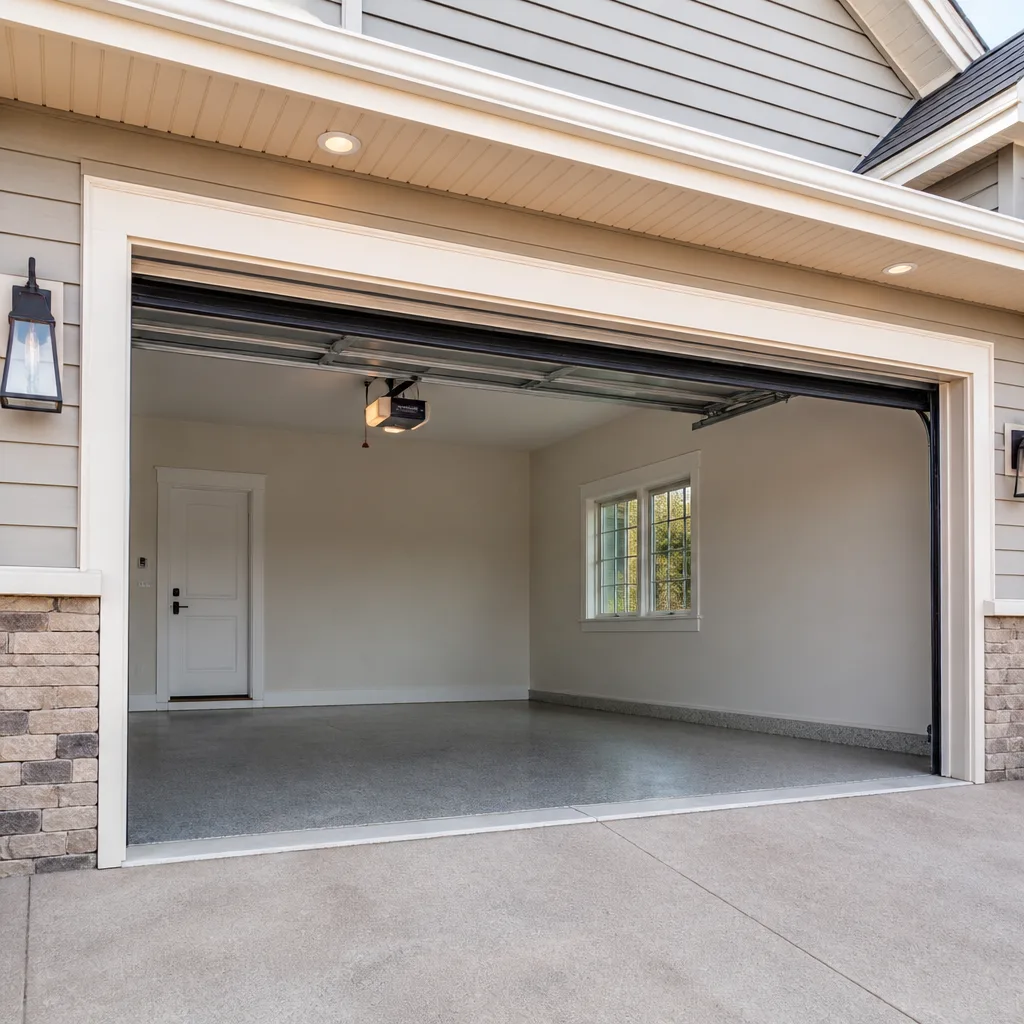
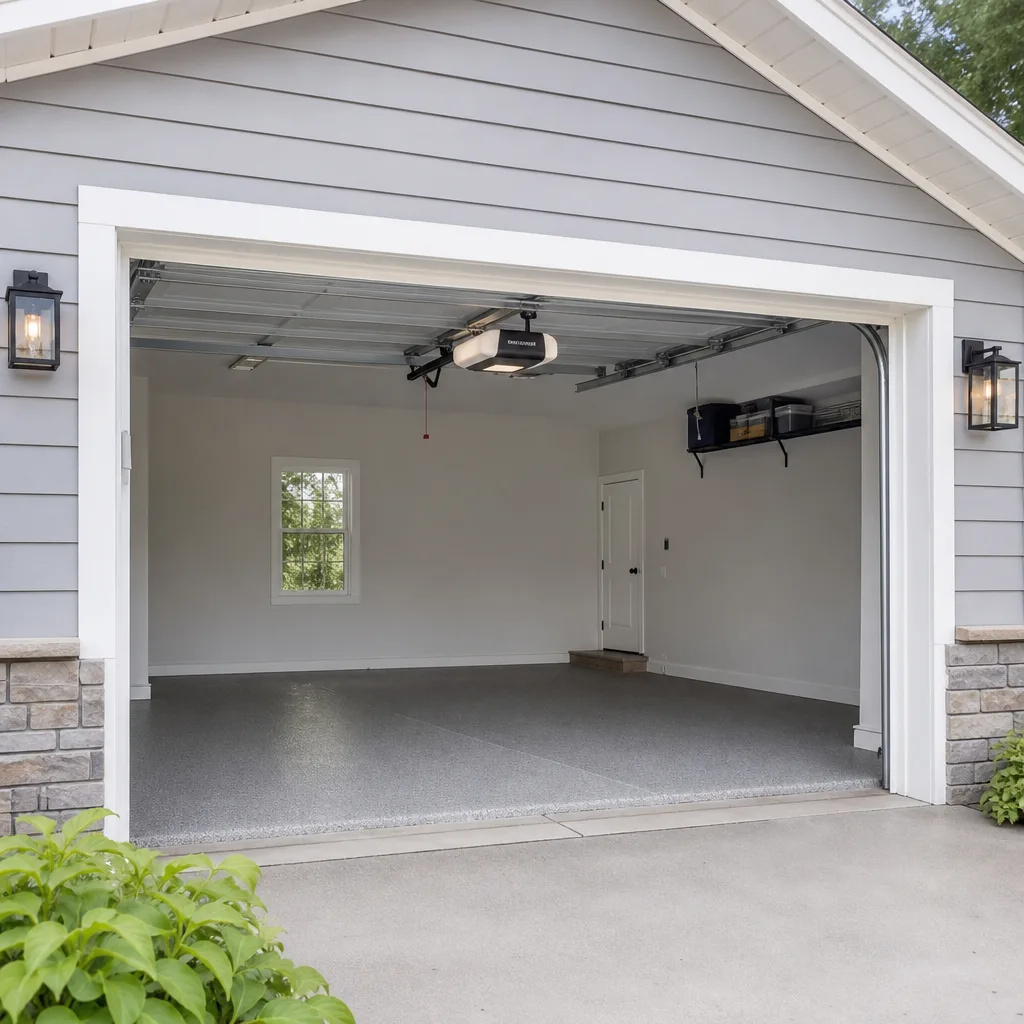
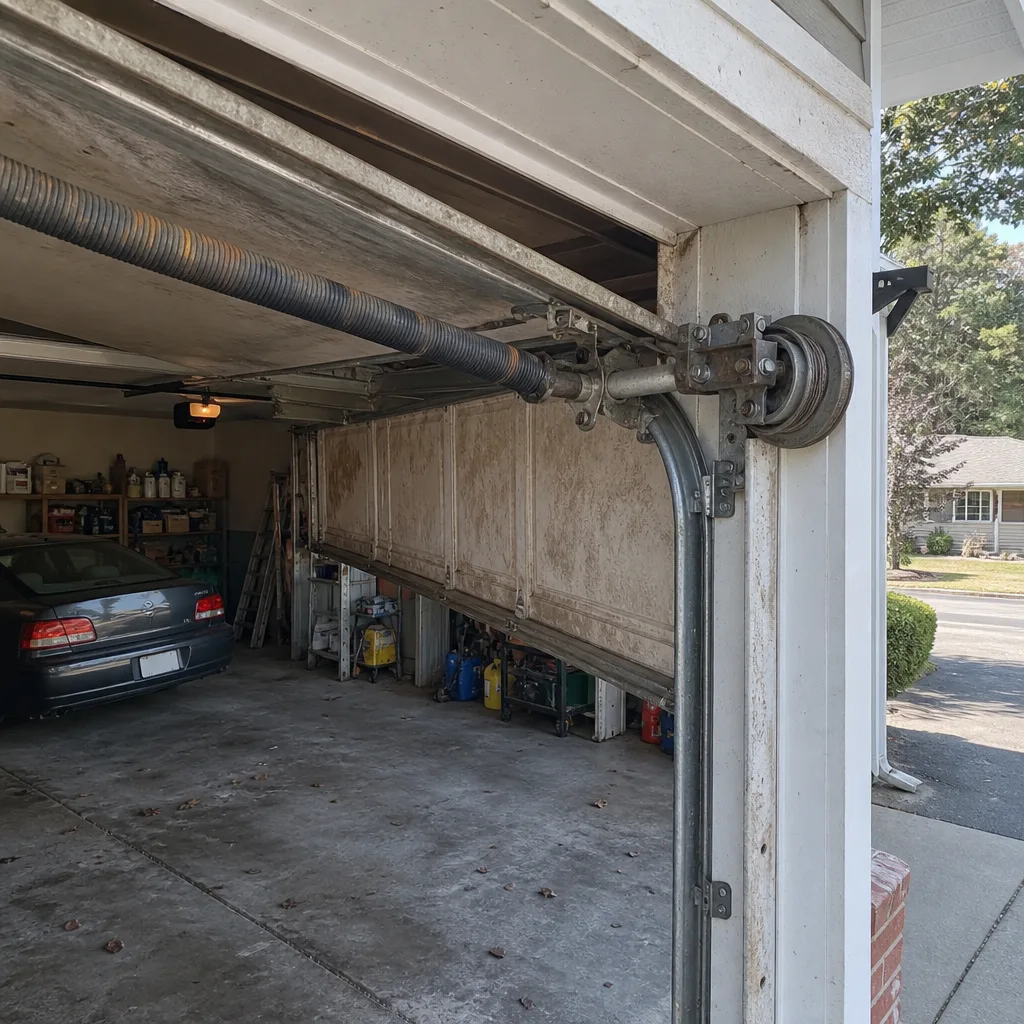 Before
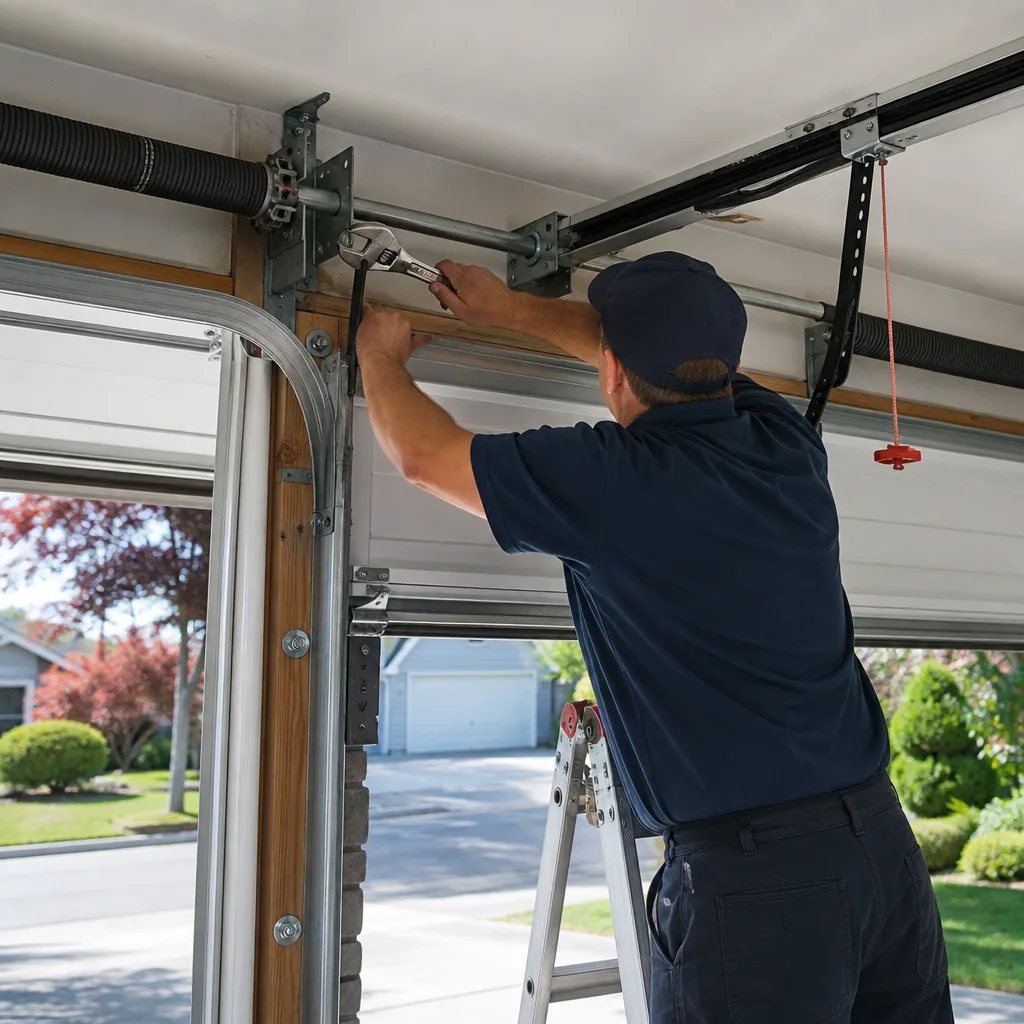 After
After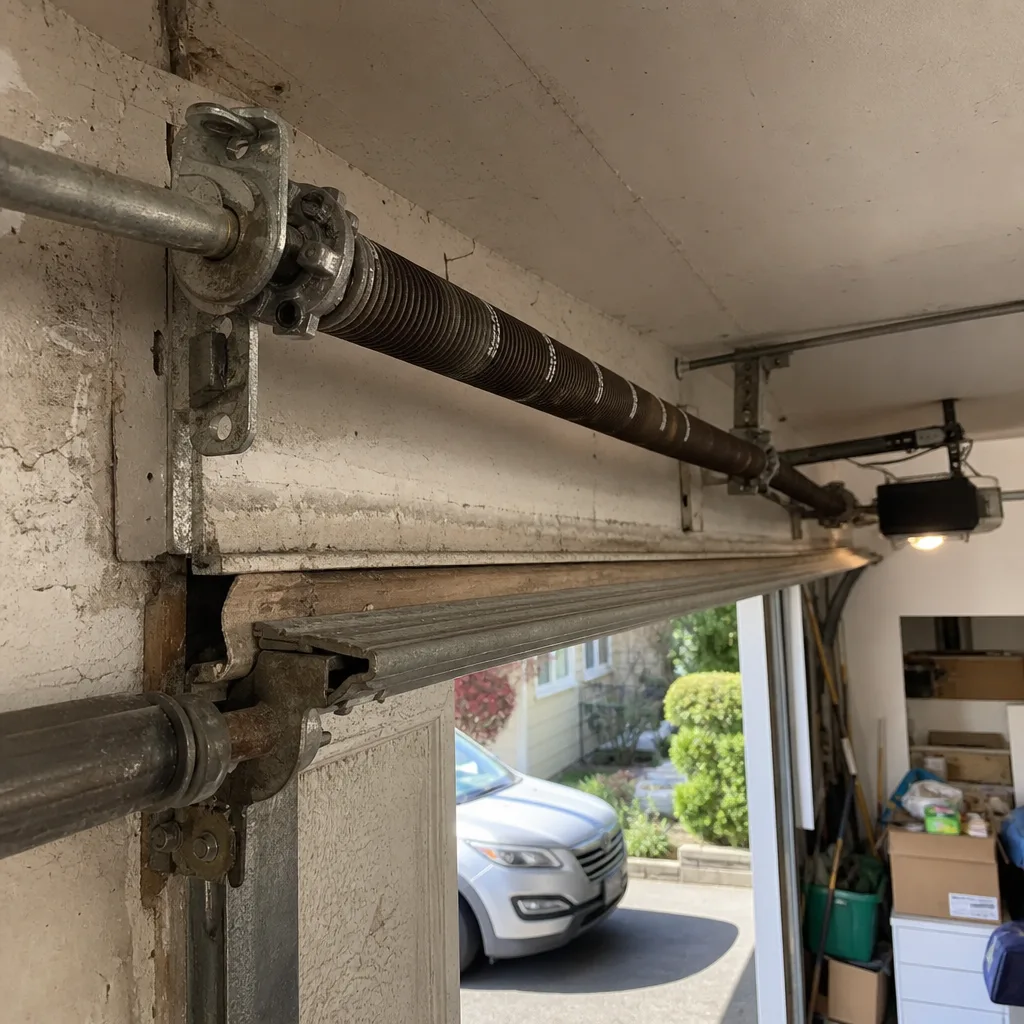 Before
 After
After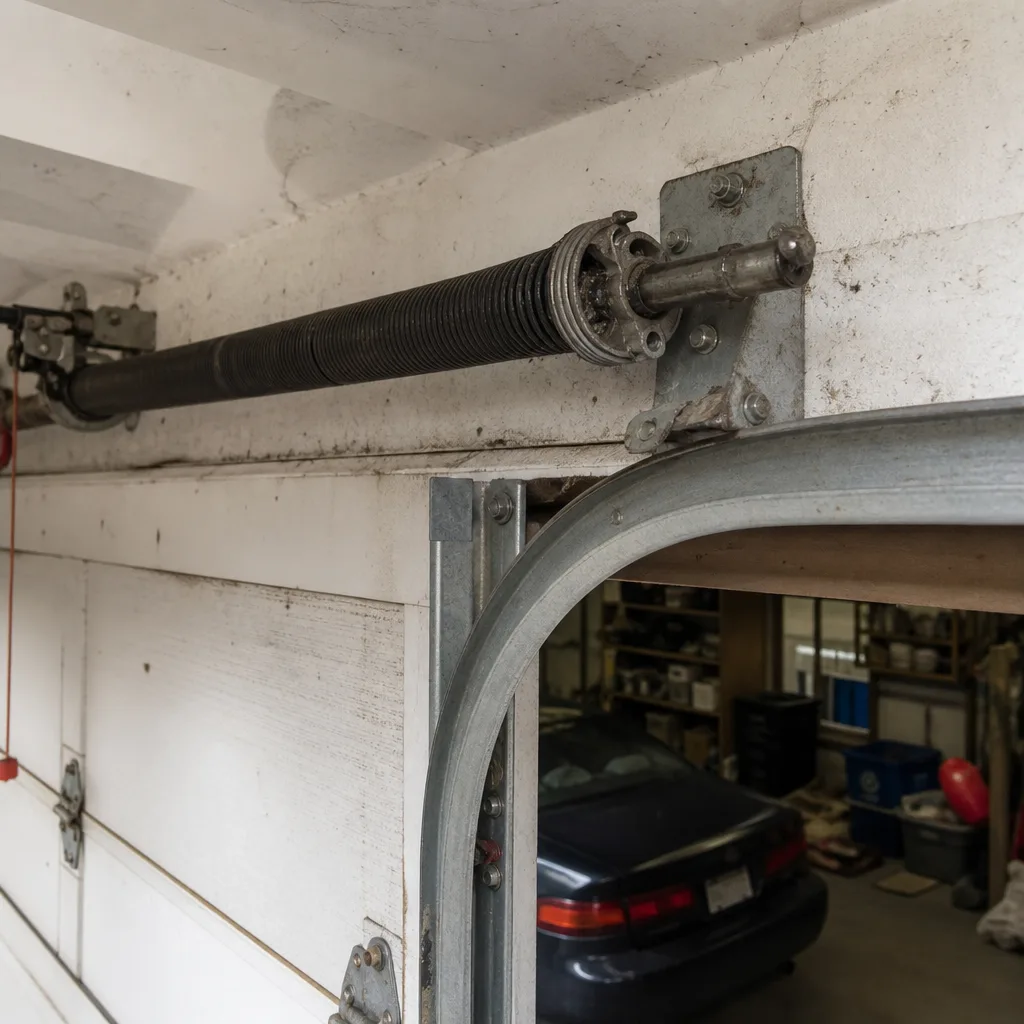 Before
 After
AfterThe Complete Guide to Garage Door in Redmond
The average Redmond homeowner replaces a garage door once in 20 years. The last time most of us did this, smartphones didn’t exist, and the market looked completely different. Today’s doors are engineered to different wind-load standards, opener technology has shifted from AC chain-drive to DC belt-drive with integrated smart-home logic, and Redmond’s building codes now reference DASMA performance grades that weren’t part of the conversation in 2005. This guide maps every decision point you’ll actually face - from whether your existing tracks can accept a new panel to what your HOA needs before you schedule installation - so you can treat it as a checklist, not a catalog. For more guides & resources, visit our blog.
Quick Answer
A garage door purchase in Redmond involves four sequential decisions: whether to repair or replace, which material and insulation level match our wet climate, whether your opener needs simultaneous replacement, and what documentation your HOA or the city requires before work starts. Most Redmond homeowners with doors over 15 years old find that full replacement with a steel-polyurethane door, paired with a DC belt-drive opener, delivers the best long-term value given our moisture levels and updated wind-load requirements. See our DIY vs Professional Garage Door: The Redmond Homeowner’s Decision Guide for help deciding who should do the work.
Table of Contents
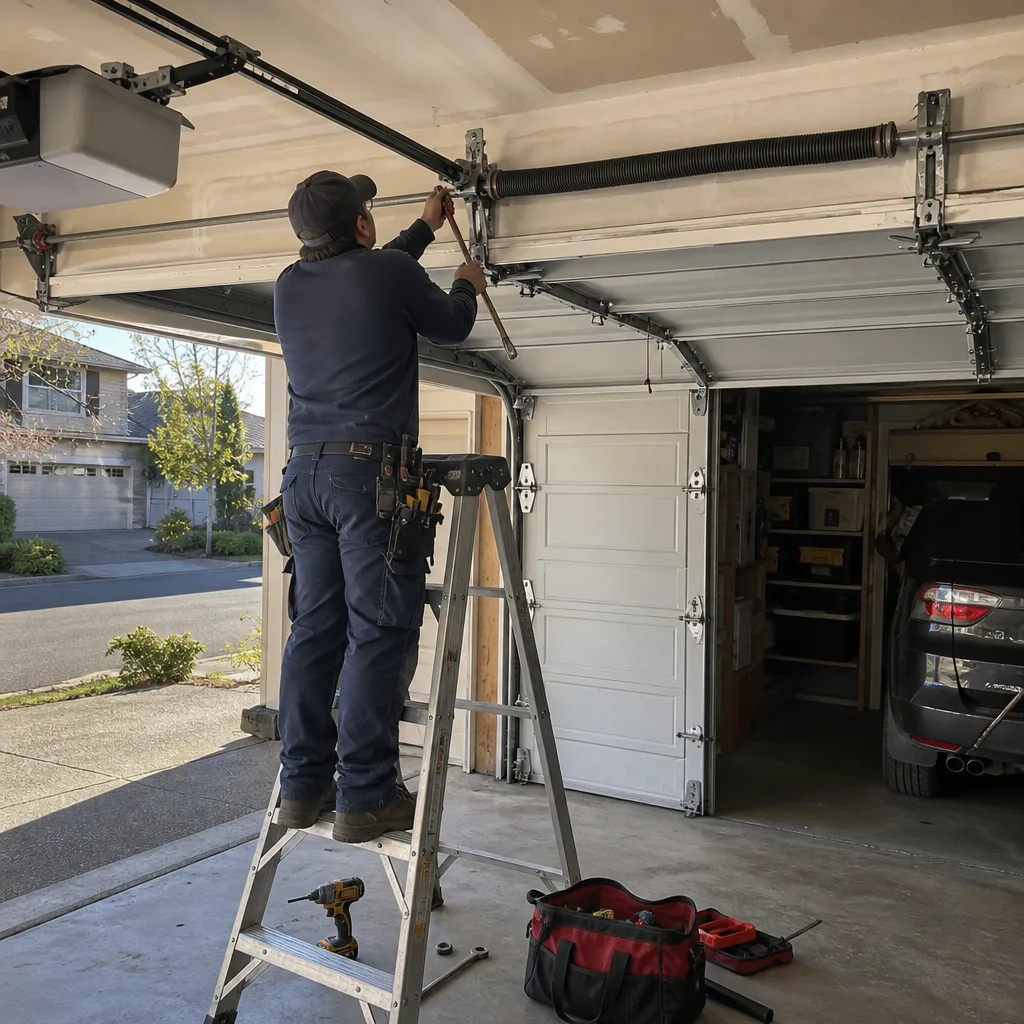
- Repair or Replace? The Track-Compatibility Test
- Materials and Insulation for Redmond’s Climate
- Why Your Opener and Door Must Be Spec’d Together
- Understanding DASMA Performance Grades
- HOA Submissions and Permit Requirements in Redmond
- Brand and Style Options That Hold Up Here
- What Garage Door Work Costs in Redmond
- Choosing an Installer: What to Verify
 Before
 After
AfterRepair or Replace? The Track-Compatibility Test
Not every damaged door needs replacement. Some situations call for panel replacement, section repair, or hardware overhaul. The decision hinges on a test most homeowners don’t know to perform: track-compatibility verification.
Here’s how it works. Garage door tracks come in specific radii and widths matched to the door’s height, weight, and hardware system. A standard 7-foot door typically uses a 12-inch radius track. An 8-foot door might need 15-inch radius. The track’s gauge (thickness), bracket spacing, and roller type must match the replacement panel or door. If they don’t, the door won’t cycle smoothly, and you’ll chew through rollers and hinges prematurely.
Panel replacement is viable when:
- The damage is isolated to one or two sections
- The existing track is straight, properly anchored, and matched to the door’s original specifications
- The manufacturer still produces the exact panel profile and color
- The door is under 10 years old, so remaining sections haven’t fatigued
Full replacement becomes necessary when:
- The track is bent, corroded, or incompatible with modern hardware
- The door predates 2010 and lacks modern safety features like pinch-resistant panels
- Multiple sections are damaged or delaminated
- You want to change the door’s size, style, or insulation level
In Redmond’s older neighborhoods like Education Hill and Grass Lawn, we regularly see 1980s and 1990s doors with 1.5-inch track systems that no major manufacturer supports. The hardware is obsolete. Panel replacement isn’t even on the table because the geometry won’t accept modern rollers or hinges. We document this with photos, show the customer the track profile and bracket spacing, and quote replacement with a written scope before any work starts.
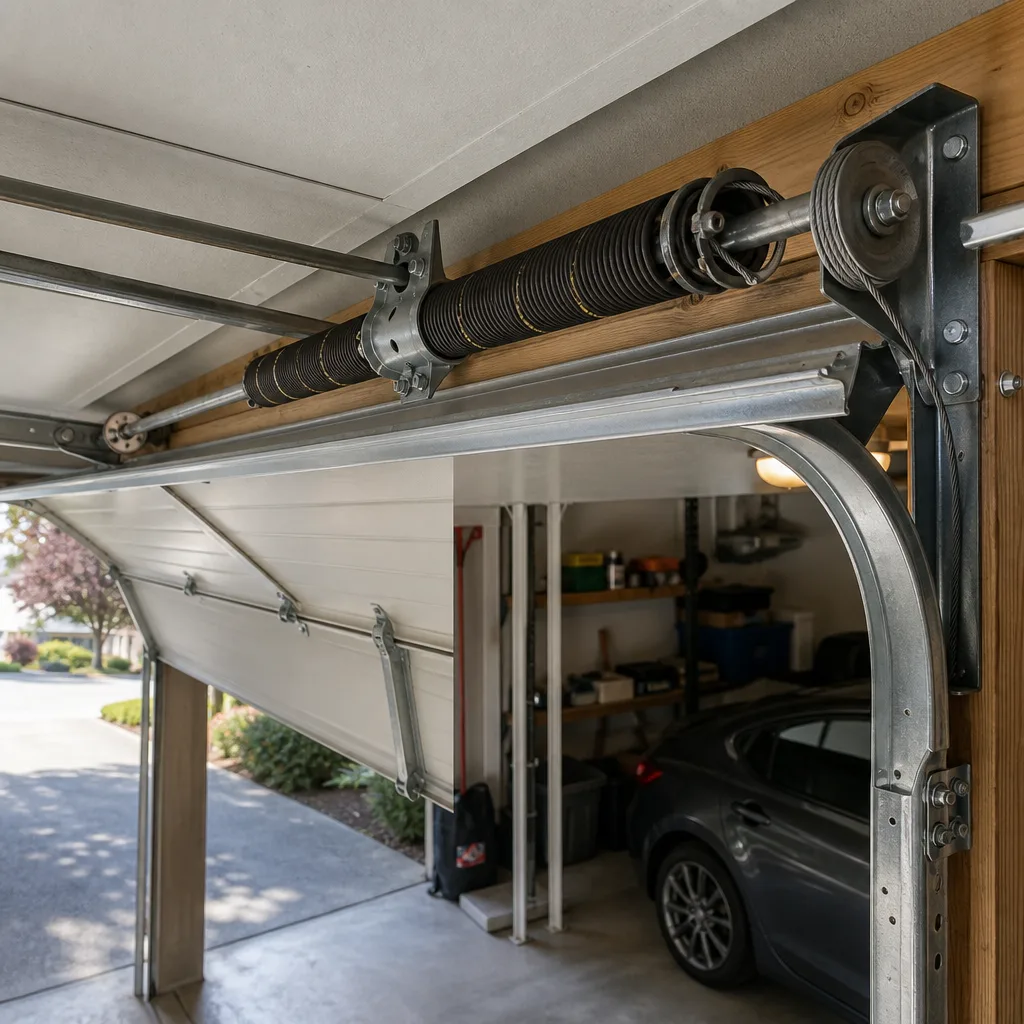
The other factor is spring system fatigue. Torsion springs are rated for a specific cycle count - typically 10,000 cycles for standard springs, 20,000 or 30,000 for high-cycle versions. If your door is 15 years old and used twice daily, those springs are near end of life. Replacing panels while leaving fatigued springs is poor economics. We measure the spring’s wire diameter, inside diameter, and length, then calculate remaining cycle life. If it’s under 20%, we recommend replacement as part of the scope.
Materials and Insulation for Redmond’s Climate
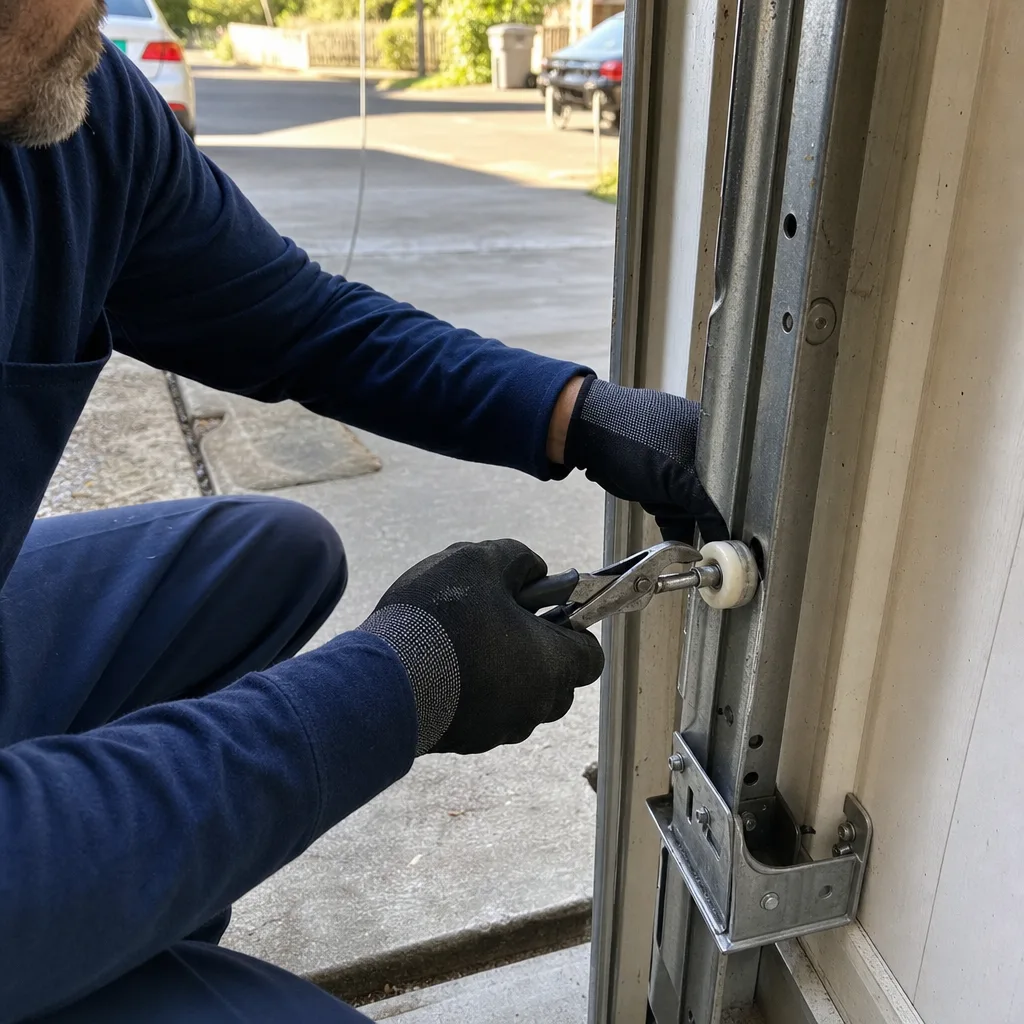
Redmond’s climate data tells a specific story: 156 days of measurable precipitation annually, average winter humidity around 80%, and temperature swings that stress door materials through thermal cycling. Your garage door is the largest uninsulated surface on most homes, and in our climate, material selection isn’t about aesthetics first. It’s about what survives 15 years of wet winters without delaminating, rusting through, or losing structural integrity.
Steel with polyurethane core is what we install most often in Redmond, and there’s a specific reason. Polyurethane is a closed-cell foam that bonds to the steel skins during manufacturing, creating a composite structure with higher rigidity and better moisture resistance than polystyrene, which is a looser bead-board insulation that can absorb water over time. In Redmond’s humidity, we’ve seen polystyrene-core doors develop internal condensation that corrodes the steel from the inside out. Polyurethane doesn’t do this.
The R-value difference matters too. A 2-inch polyurethane door typically rates R-18. An equivalent polystyrene door rates R-10 to R-12. For attached garages in Redmond, where the garage shares a wall with conditioned space, that difference affects your heating bill measurably. For detached garages used as workshops - common in the Overlake and Willows-Rose Hill areas - the higher R-value extends usable hours in winter without a separate heater running constantly.
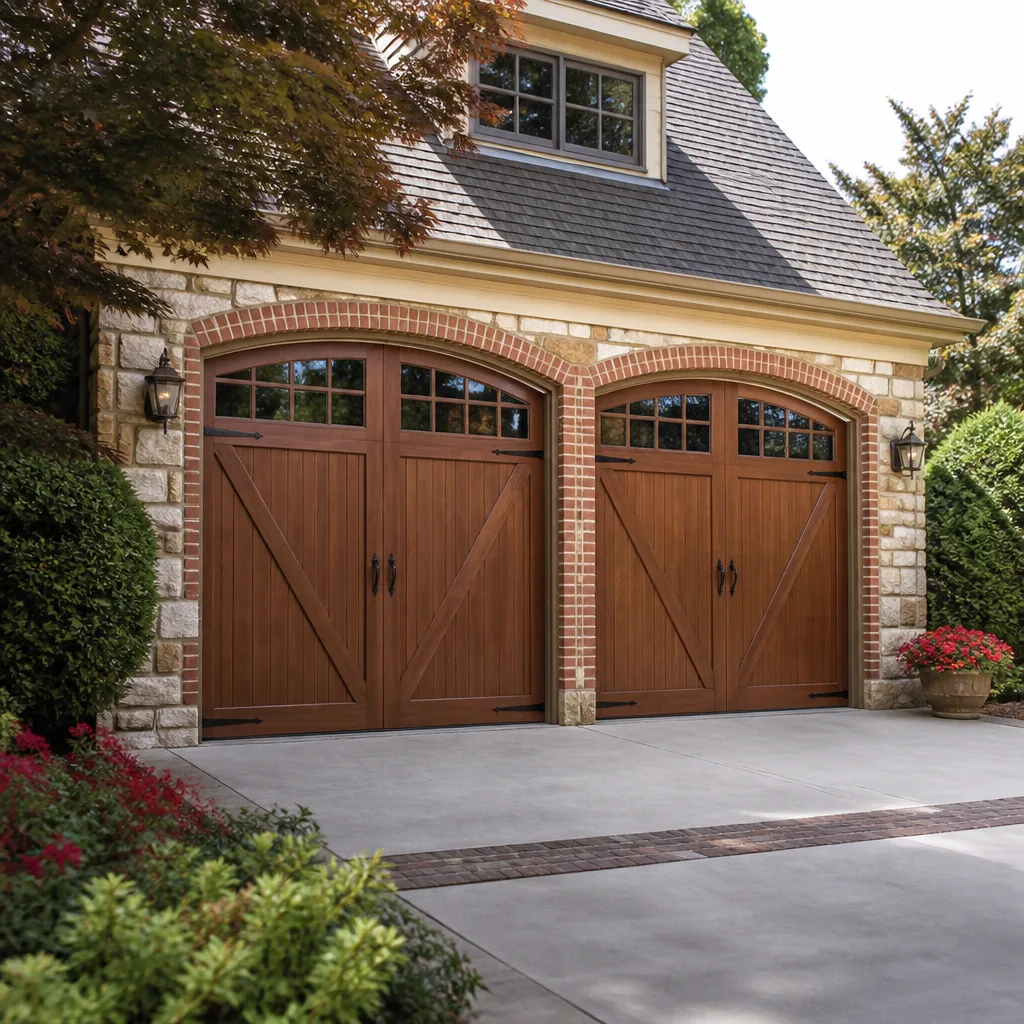
Wood and wood-composite doors present a different calculation. They look better on Craftsman and Northwest Contemporary homes, which are common in Redmond’s 1960s-1980s neighborhoods. But they require maintenance: staining or painting every 3-5 years, seal inspection, and hardware adjustment as the material expands and contracts. We don’t recommend wood for doors facing west or southwest, where afternoon sun followed by evening moisture creates the most aggressive cycling. If you want the wood look without the maintenance, modern steel doors with woodgrain embossing and composite overlays have improved to where the difference is hard to spot from the street.
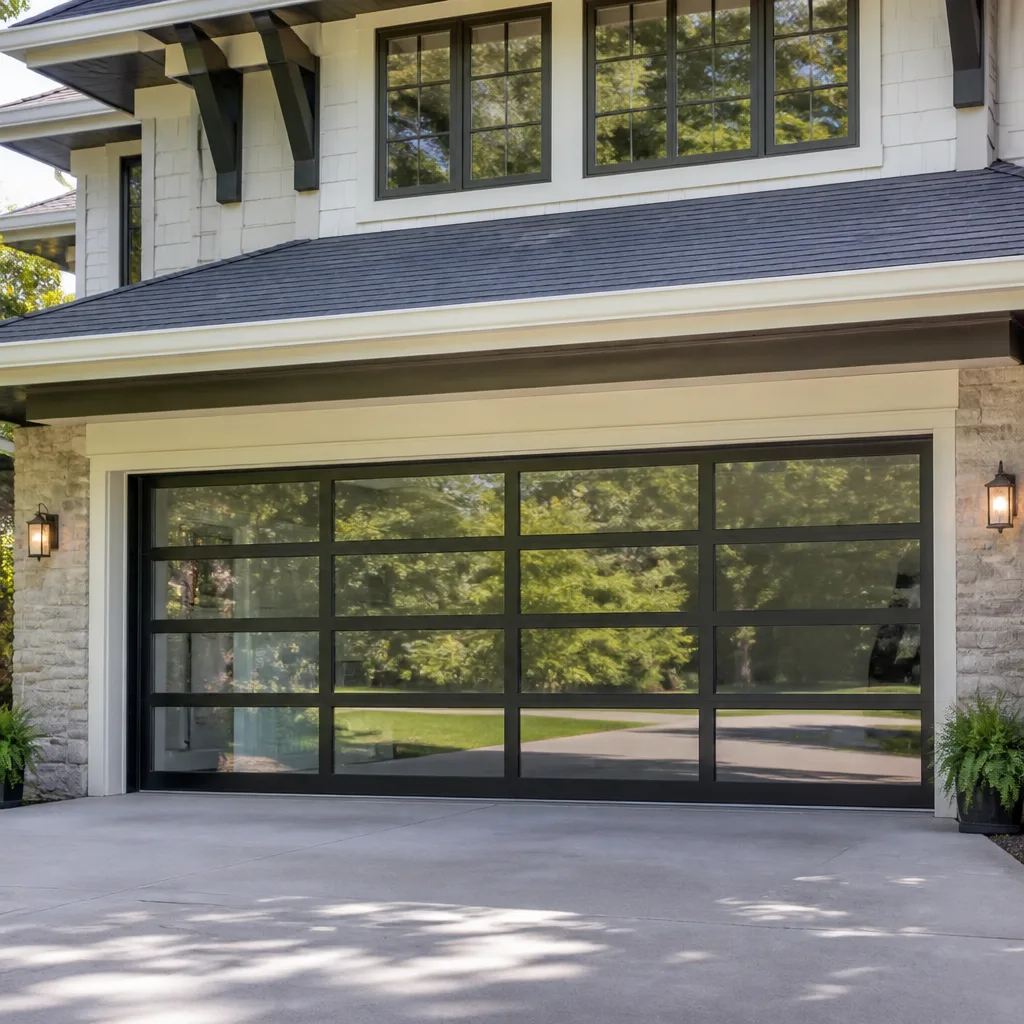
Aluminum and glass doors work for modern architecture, but the thermal performance is poor. The frames are thermally broken, but the glass panels are single-pane in most configurations. We see these on custom homes in Avignon and the newer Redmond Ridge developments, where the aesthetic priority overrides energy concerns. If you’re considering this style, budget for a garage heater or accept that the space will stay cold from November through March.
Key specification for Redmond: Look for 24- or 25-gauge steel on the exterior face, 27-gauge minimum on the interior, with a baked-on polyester or fluoropolymer finish rated for marine or severe environments. The finish warranty should be at least 10 years, and the door should carry a wind-load rating appropriate for our zone - more on that in the DASMA section below.
Why Your Opener and Door Must Be Spec’d Together
The most expensive mistake we correct in Redmond is the mismatched opener-door pair. A homeowner buys a quiet, feature-rich DC belt-drive opener, installs it on a 20-year-old solid-wood door, and burns out the motor in 18 months. Or they install a heavy insulated steel door on an opener rated for 150 pounds, and the trolley carriage strips its gears.
The math is straightforward but rarely explained. Every opener has a horsepower rating and a nominal lifting capacity. Every door has an actual weight that varies with material, size, insulation, and window inserts. The opener’s job isn’t to lift the full door weight - the torsion springs do that - but to manage the imbalance and provide controlled motion. If the door is too heavy for the opener’s torque curve, the motor runs at excessive load, overheats, and fails prematurely.
Here’s the specification sequence we follow:
- Weigh the door or calculate from manufacturer specs. A standard 16×7 uninsulated steel door weighs 150-180 pounds. The same size with 2-inch polyurethane insulation and glass inserts can hit 250 pounds. A solid wood door can exceed 350 pounds.
- Match to opener horsepower and drive type. ½ HP handles up to 300 pounds with a properly balanced door. ¾ HP covers 300-500 pounds. 1 HP and above is reserved for oversized or solid wood doors. DC motors provide smoother starting and stopping, which reduces stress on door hardware.
- Verify rail length and door height. A 7-foot door needs a standard rail. An 8-foot door needs an extension kit. A 10-foot door needs a commercial rail system. Mismatch here causes the trolley to bottom out or the door to stop short.
- Check force-setting compatibility. Modern openers have adjustable force limits. These must be calibrated to the door’s actual weight, not left at factory defaults. Incorrect force settings create safety hazards and premature wear.
In Redmond, we see a lot of 8-foot doors in newer construction, especially two-car garages in the Bella Bottega and Redmond Town Center areas. Homeowners buy a standard opener, realize the rail is too short, and attempt improvised solutions that void warranties and create safety issues. We measure first, spec second, quote third. Clause 1 of The Haven Standard means the written price includes the correct rail, the correct horsepower, and the correct force calibration - no surprises after installation starts.
Smart-home integration is another spec point. If you want MyQ, Aladdin Connect, or integrated camera monitoring, that affects opener selection. Not all models support all platforms, and some require specific hub hardware. We verify your existing ecosystem before quoting, because swapping an opener for compatibility reasons six months later is expensive and avoidable.
Understanding DASMA Performance Grades
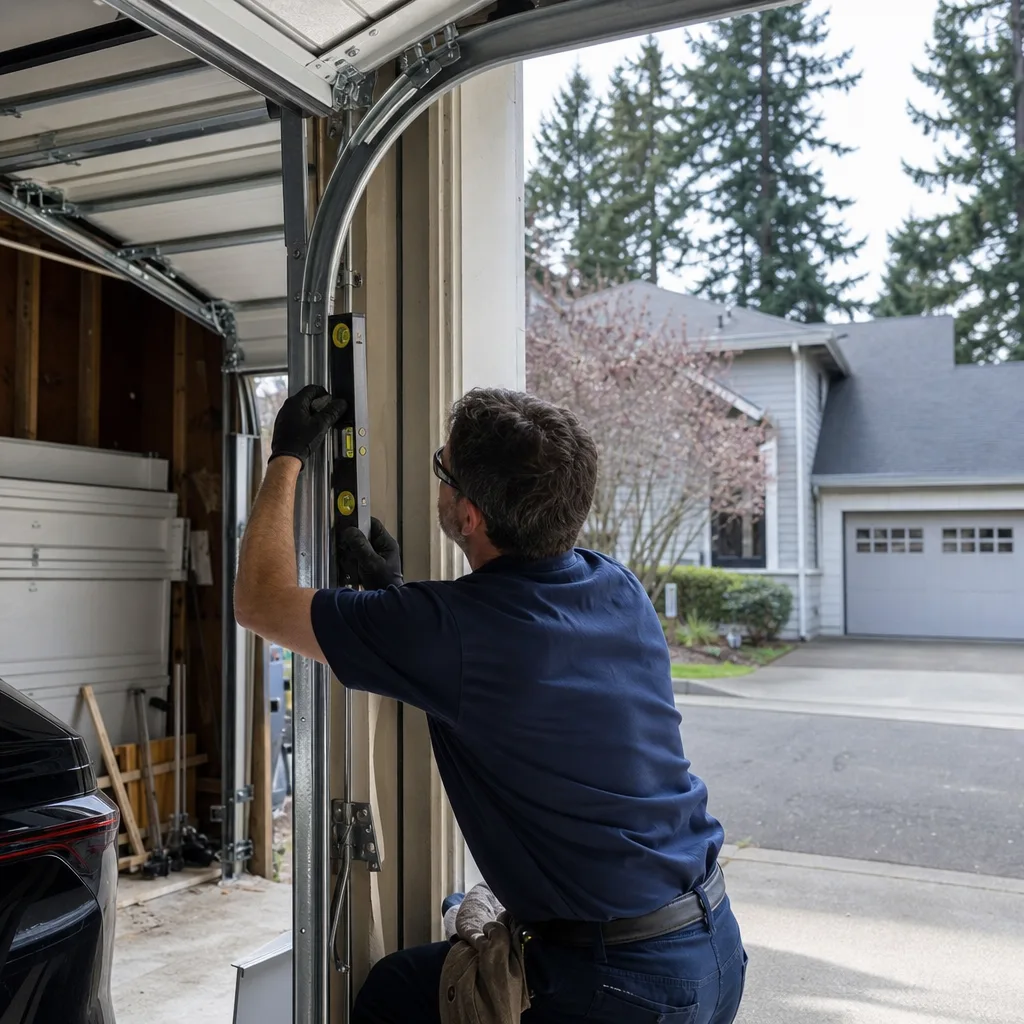
DASMA, the Door and Access Systems Manufacturers Association, sets performance grades that tell you what a door can actually withstand. Most Redmond homeowners have never heard of these grades, but they’re referenced in building codes and should factor into your selection.
The grade system runs from 1 to 5, with additional wind-load ratings expressed in PSF (pounds per square foot). Here’s what each level means in practical terms:
- Grade 1: Residential light duty. 10,000 cycle life. Suitable for single-car garages with light use. Not recommended for primary homes where the door cycles multiple times daily.
- Grade 2: Residential standard duty. 25,000 cycle life. The minimum we recommend for any Redmond home with two or more residents. Handles typical daily use without premature wear.
- Grade 3: Residential heavy duty. 50,000 cycle life. Appropriate for three-car garages, home-based businesses with frequent vehicle access, or households that cycle the door 6+ times daily.
- Grade 4: Commercial light duty. 100,000 cycle life. Overkill for most homes but specified in some Redmond townhome associations for uniform durability.
- Grade 5: Commercial standard duty. 100,000+ cycle life. Not typically relevant to residential selection.
Wind-load ratings are separate from grade. The Pacific Northwest isn’t hurricane country, but our wind patterns matter. Redmond sits in the Puget Sound convergence zone, where winds from the Strait of Juan de Fuca and the Columbia River Valley interact unpredictably. Gusts to 50 mph occur several times annually, and exposed homes on Education Hill or near the Sammamish River valley catch more wind than sheltered neighborhoods.
A door rated for 20 PSF handles winds to approximately 90 mph. For most Redmond homes, this is adequate. Homes on exposed ridges or with large door faces (18 feet wide or more) should consider 25-30 PSF ratings. The cost difference is typically 10-15%, but the alternative is a door that bows in high wind, stresses its hardware, and potentially fails structurally.
We document the wind-load requirement in our written scope, matched to your home’s exposure and door size. This isn’t upselling. It’s specifying correctly the first time.
HOA Submissions and Permit Requirements in Redmond
Redmond has a higher concentration of planned communities and townhome associations than most Eastside cities. This creates a documentation layer that many homeowners don’t anticipate until they’re already committed to a purchase.
HOA submission requirements vary, but typically include:
- Color and style approval. Most Redmond HOAs maintain a palette of 4-8 approved colors and 2-4 panel designs. The application requires a physical sample or manufacturer color chip, not a screen rendering.
- Material specification. Some associations prohibit certain materials (aluminum/glass in traditional neighborhoods, wood-composite in fire-prone zones) or mandate specific insulation levels.
- Installation contractor documentation. License, insurance certificate, and sometimes a bond. We provide this as standard; our license number appears on every written scope, not buried in fine print.
- Structural engineering letter. Required by some associations for wind-load-rated doors or oversized openings. We coordinate this with the manufacturer when needed.
The major Redmond communities with active design review include Redmond Ridge, Trilogy at Redmond Ridge, Avignon, and the various townhome associations near Redmond Town Center. Each has its own timeline - typically 2-4 weeks for approval, sometimes longer if the board meets monthly. We recommend submitting before ordering the door, because custom colors and panel profiles often carry 4-6 week lead times. Ordering first, then waiting for HOA denial, creates an expensive scheduling problem.
City of Redmond permits are required for new door installations in new construction or when the opening size changes. Simple replacement of an existing door on existing tracks typically doesn’t trigger a permit, but we verify this during our site measure. The city references the International Residential Code with local amendments, including wind-load and safety standards. See Garage Door Permits, Codes & Inspections in WA: What You Need to Know for full details. Our technicians carry current code knowledge and flag any permit requirement before quoting.
We include HOA submission support in our standard process: we provide the color chips, the specification sheets, the contractor documentation, and direct manufacturer contact if the board wants to verify anything. This is part of the flat price, not an add-on.
Brand and Style Options That Hold Up Here
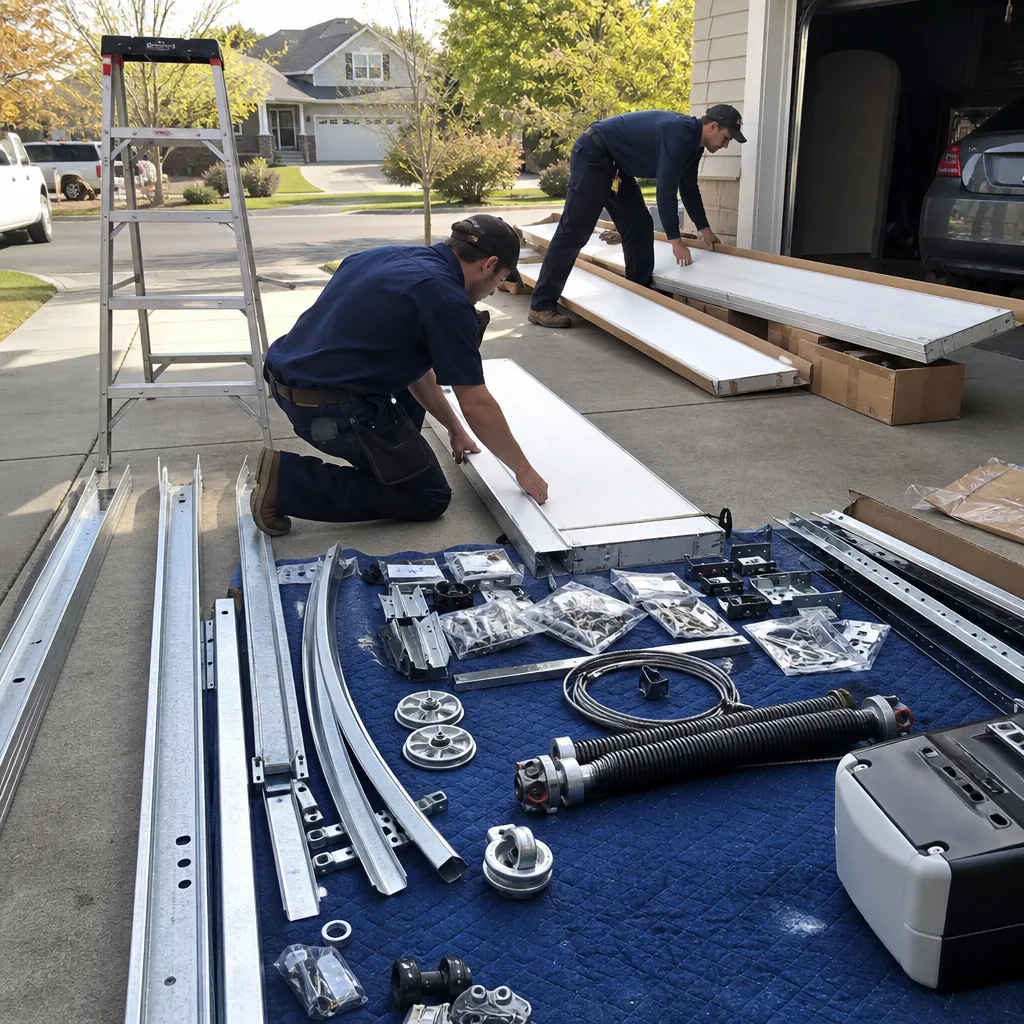
We service all eight major brands - LiftMaster, Chamberlain, Genie, Clopay, Amarr, Wayne Dalton, Craftsman, and Raynor - and install from the same set. In Redmond’s climate, we have observed meaningful differences in long-term performance.
Clopay offers the broadest range of insulated steel doors with polyurethane cores, including the Gallery and Canyon Ridge collections that match Northwest Contemporary and Craftsman architecture common in Redmond’s older neighborhoods. Their Intellicore insulation system is polyurethane-based and performs well in our humidity. We’ve installed hundreds in Redmond with strong track records.
Amarr emphasizes wind-load engineering and has strong options for exposed homes. Their Stratford and Lincoln collections use triple-layer steel construction with polyurethane cores. The hardware systems are heavier-duty than some competitors, which matters for doors that see frequent use.
Chamberlain and Genie dominate the opener market. Chamberlain’s belt-drive models with built-in WiFi (myQ integration) are what we install most often for homeowners who want smart-home connectivity without separate hub hardware. Genie’s screw-drive systems have a loyal following for heavy doors, though the noise level is higher than belt-drive. For attached garages where living space shares a wall, we typically recommend Chamberlain’s DC belt-drive for quiet operation.
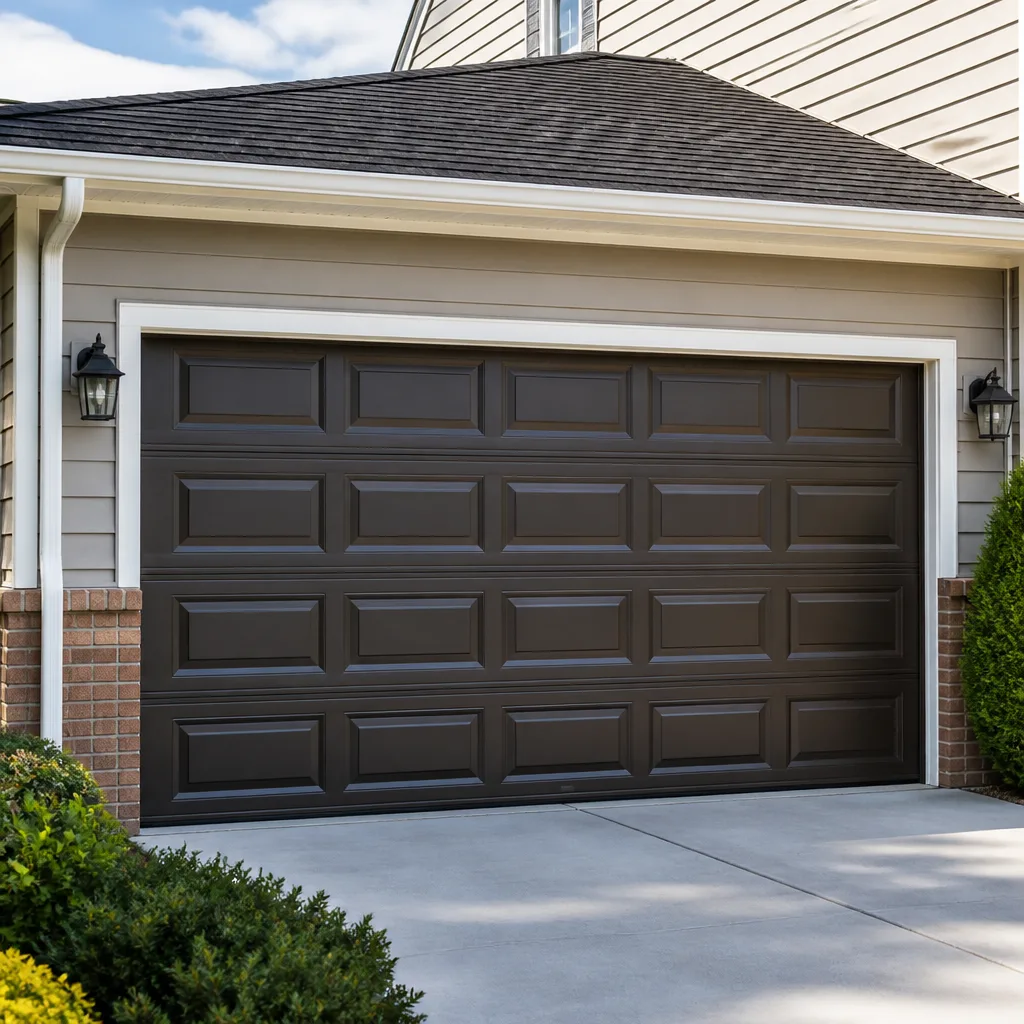
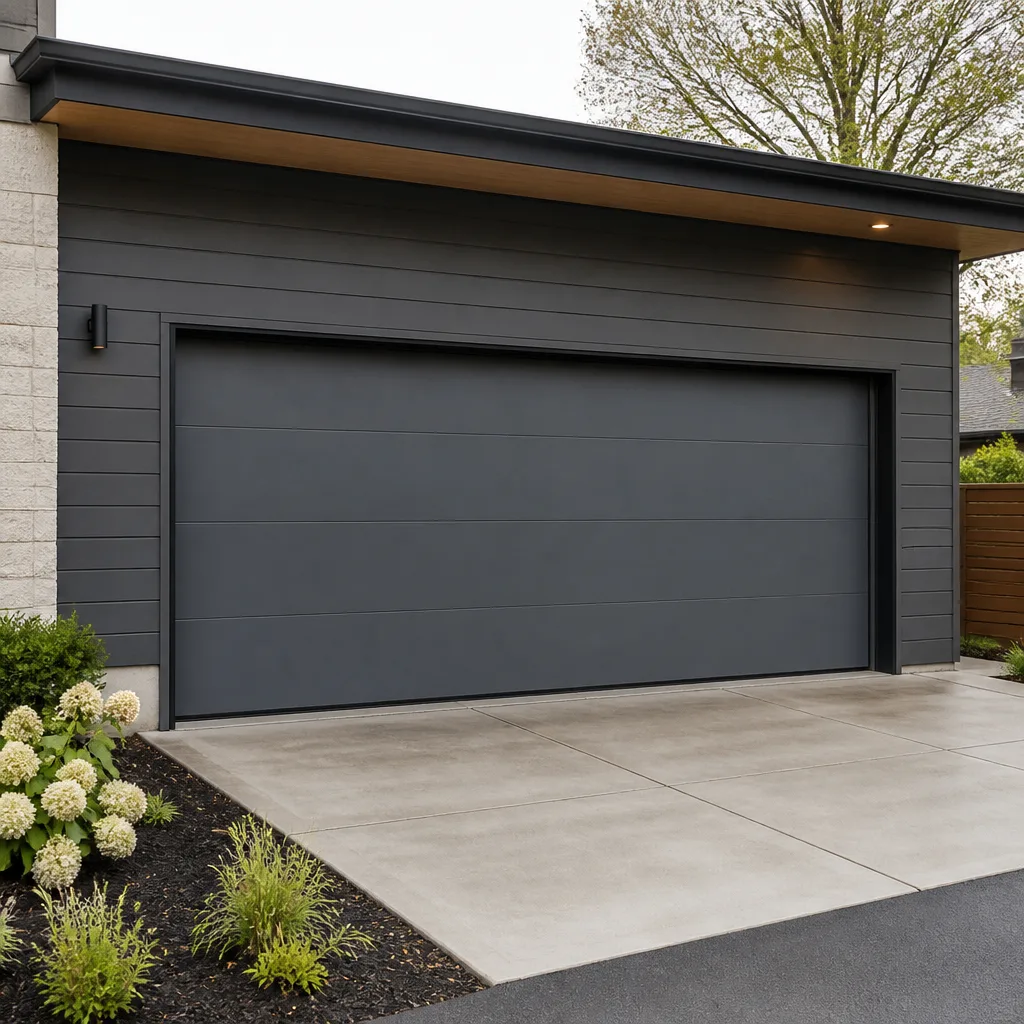
Style selection in Redmond follows architectural context. Raised-panel doors work on traditional homes but look dated on modern builds. Flush-panel and contemporary glass-aluminum designs suit newer construction in Redmond Ridge and downtown infill. Carriage-house overlays remain popular in Education Hill and Grass Lawn, where the 1970s-1990s homes benefit from visual warmth.
We photograph your existing door and home elevation during our free measure, then show you manufacturer renderings with your actual house color matched. This eliminates the imagination problem that leads to costly color mistakes.
What Garage Door Work Costs in Redmond
Price transparency is Clause 1 of The Haven Standard. We quote flat, written prices before any work starts - no exceptions. Here are the ranges we see in the Redmond market for work performed to code with documented photo records and warranty support. Our Garage Door Cost Breakdown: The Redmond Homeowner’s Reference for 2026 explains what drives these numbers.
| Service | Typical Range | What Affects Price |
|---|---|---|
| Spring repair (standard torsion, one spring) | $180 – $280 | Door weight, spring cycle rating, single vs. double spring system |
| Spring repair (high-cycle or double spring) | $280 – $420 | Door size, commercial-grade hardware, same-day emergency timing |
| Cable replacement (pair) | $150 – $220 | Cable drum type, corrosion level, associated roller condition |
| Panel replacement (single section, steel) | $350 – $600 | Panel availability, color match difficulty, track compatibility |
| Full door replacement (single car, 8×7, steel, insulated) | $1,200 – $2,200 | Insulation level, window inserts, hardware grade, wind-load rating |
| Full door replacement (double car, 16×7, steel, insulated) | $1,800 – $3,500 | All above factors, plus opener replacement if needed |
| Opener replacement (½ HP, chain drive) | $400 – $650 | Rail length, remote count, smart-home features |
| Opener replacement (¾ HP, belt drive, WiFi) | $550 – $900 | Brand, battery backup, camera integration, force calibration complexity |
| Full door + opener package (16×7, mid-grade) | $2,400 – $4,200 | Brand combination, installation complexity, haul-away of old door |
These ranges reflect Redmond’s market specifically - labor rates, permit costs, and travel logistics differ from Seattle or Bellevue. We don’t adjust prices based on neighborhood; the written quote is the written quote.
What our flat price includes: all hardware, springs rated for the door weight, track system if replacement is specified, opener rail and motor if applicable, haul-away of old components, force calibration and safety reverse testing, documented photo record of findings and completed work, and the 365-Day Done Right Promise. If we find rot in the door frame, damaged wiring, or other conditions outside the scope, we photograph it, explain it, and quote it separately before proceeding. The price doesn’t change once work starts unless you approve additional scope in writing.
We also offer a Free Second Opinion on any written estimate from another company. Bring the paperwork. No coupon or code required. Clause 1 applies: we’ll give you our flat, written price for equivalent scope, and you can compare documentation to documentation.
Choosing an Installer: What to Verify
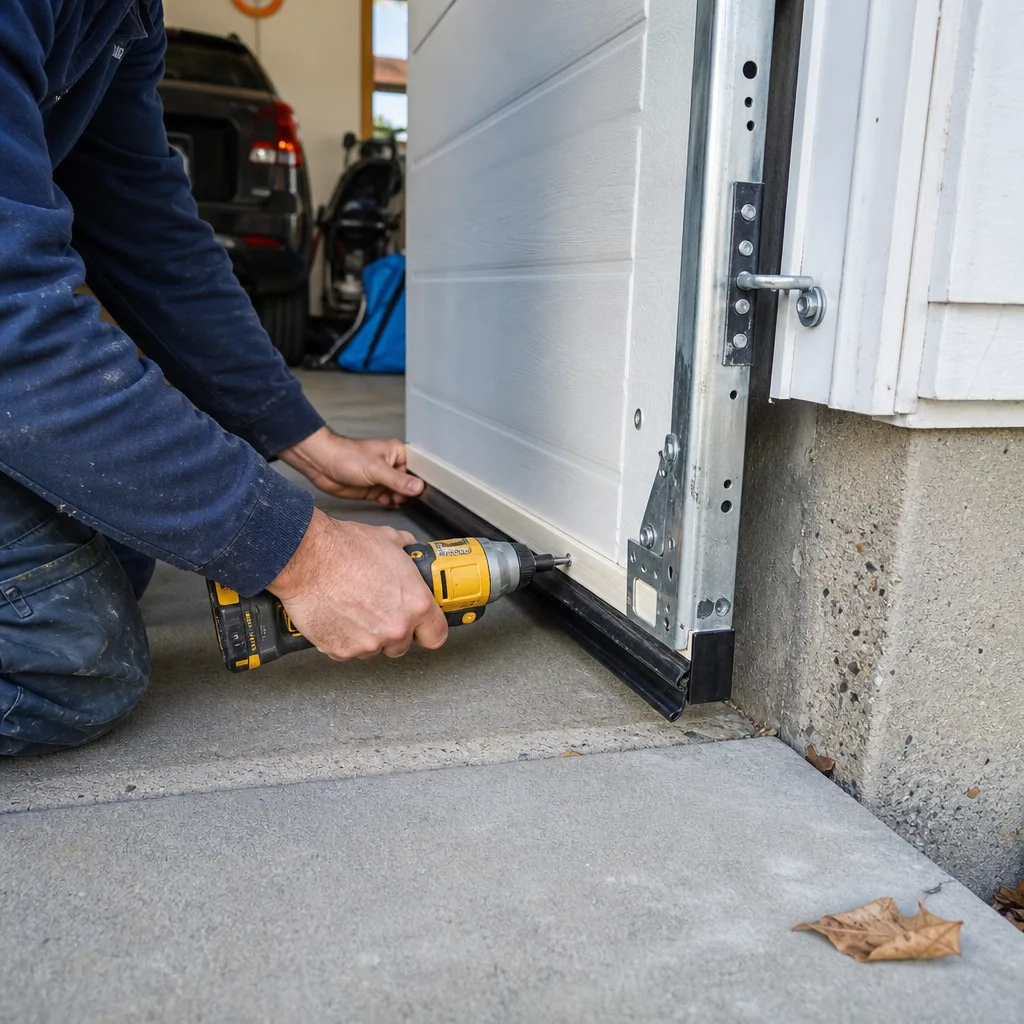
The garage door industry has low barriers to entry and high variation in quality. In Redmond, we’ve corrected work from installers who disappeared after cash payment, used wrong-weight springs that failed in months, or left safety sensors misaligned and un-tested. Here’s what to verify before you hire anyone.
License and insurance, visible and verifiable. Washington requires garage door contractors to carry a specialty contractor license. The number should appear on proposals, vehicles, and websites - not buried in fine print. We display ours on every written scope. Insurance should include general liability and workers’ compensation; ask for a certificate if it’s not offered.
Written price before work starts. This is non-negotiable. Any contractor who won’t commit to a flat price in writing before touching your door is either inexperienced or planning to adjust upward. Our Clause 1 exists because “trust us” is not a pricing strategy.
Documentation of what was found and what was done. You should receive evidence, not assurances. We photograph the failed component before quoting replacement, then photograph completed work. You get this record by text or email before the technician leaves. This traces to our founding rule from 2015: the customer sees the failed part before anyone quotes a replacement.
Technician standards. Background checks, uniforms, and named arrival notifications matter. You should know who’s coming, when, and that they’ve been vetted. Our technicians arrive in marked vehicles, in uniform, with a text notification including their name and ETA.
Warranty that means something. A “lifetime” spring warranty from a company that won’t answer the phone is worthless. Our 365-Day Done Right Promise is backed by The Haven Standard and a terms page, not a handshake. If it’s not right, we make it right. The mechanism is documented, not implied.
Local presence and accountability. National call centers dispatching to subcontracted technicians create accountability gaps. We’re independently owned and operated under The Haven Standard, with local technicians who know Redmond’s neighborhoods, codes, and common door configurations. When you call (425) 305-4847, a live person answers - 24 hours a day, including holidays - and can dispatch with a named technician and on-the-way text.
Common Mistakes to Avoid
- Buying a door online and hiring separate installation. Warranty coverage becomes disputed when manufacturer, seller, and installer are different entities. We handle supply and installation as a single scope with single accountability.
- Ignoring the R-value in favor of appearance. In Redmond’s climate, a beautiful door with poor insulation costs more to own than an efficient door that’s merely attractive. Run the heating-cost math for attached garages.
- Replacing the door without evaluating the opener. The torque mismatch explained above burns out motors and voids opener warranties. Spec them together or accept premature failure.
- Skipping HOA approval before ordering. Custom-color doors can’t be returned. We’ve seen homeowners eat $800 in restocking fees because they assumed their color choice would pass.
- Accepting “call for a quote” as normal. It’s not. Written upfront pricing is the standard. Anyone who won’t commit to a number before arriving is signaling that their number isn’t firm.
- Neglecting safety sensor alignment after any hardware work. Sensors must be tested under obstruction conditions, not just visually confirmed. This is code, and it’s life-safety.
- Choosing the lowest bid without comparing scope detail. A $200 spring job with 10,000-cycle springs costs more over time than a $280 job with 30,000-cycle springs. Compare cycle ratings, hardware grades, and warranty terms, not just bottom lines.
When to Call a Professional
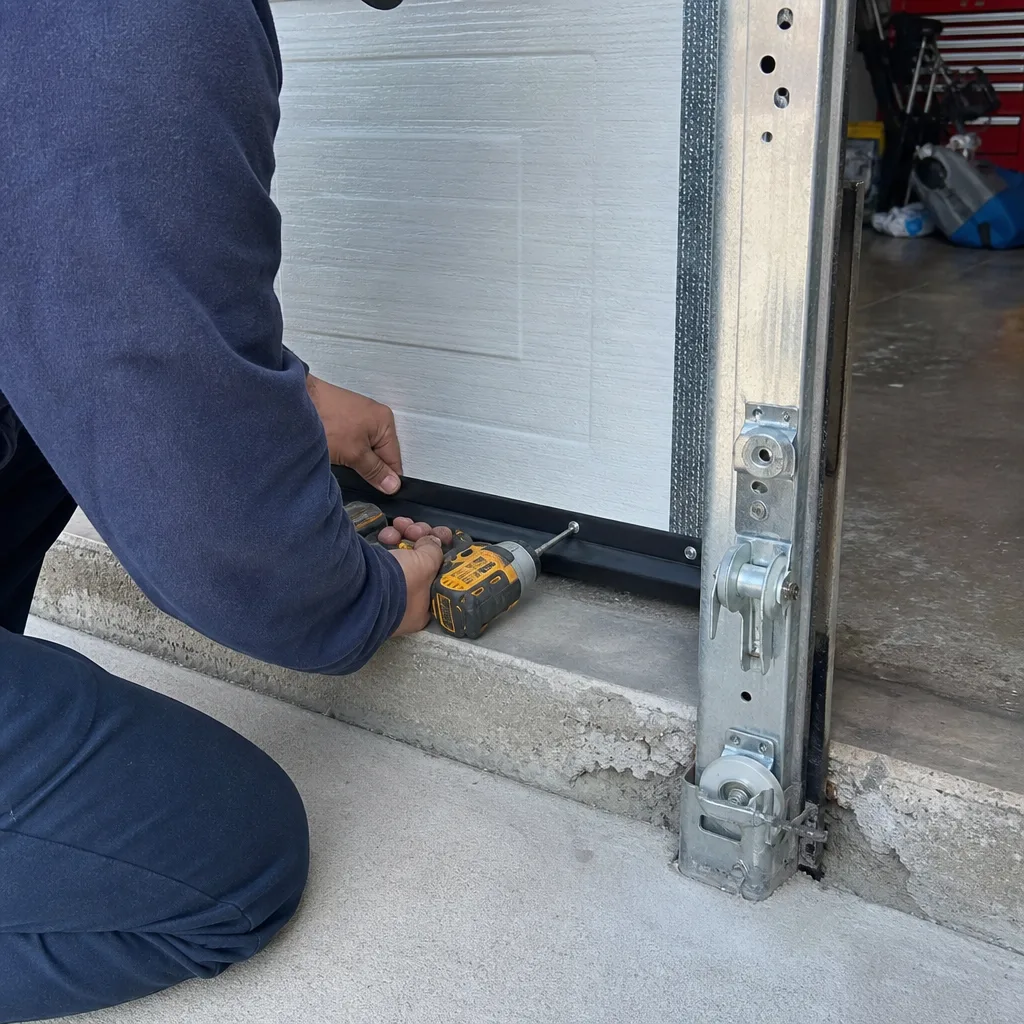
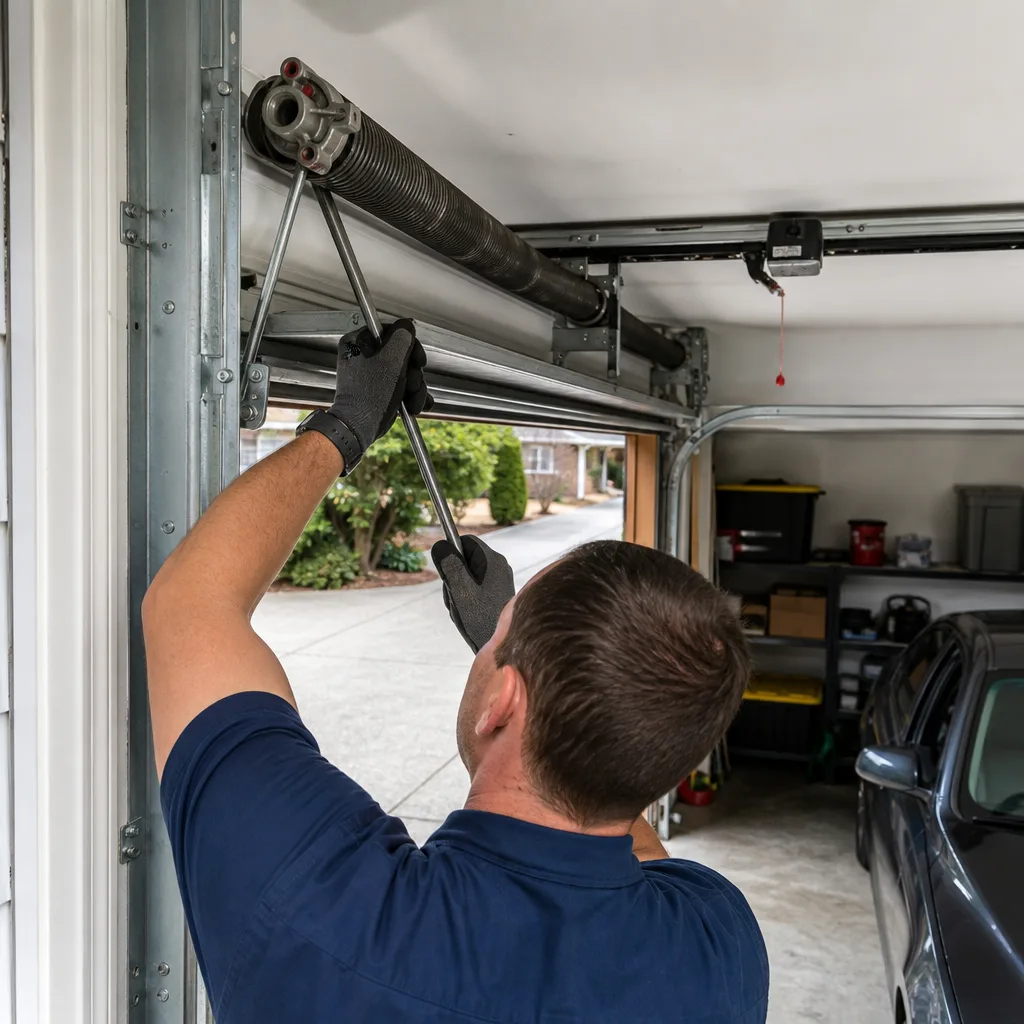
Some garage door work is genuinely dangerous and should never be DIY. Torsion springs store massive mechanical energy - a standard spring on a 16-foot door holds enough force to cause serious injury or death if released improperly. Cable replacement, bottom bracket removal, and spring winding all fall into this category. We include a safety caveat on every estimate: if the component is under tension, let a trained technician handle it.
Call for professional evaluation when: the door won’t open or close completely, makes grinding or popping noises, reverses unexpectedly, sags on one side, or shows visible damage to panels, cables, or springs. Also call before any purchase decision if your door is over 15 years old - the track-compatibility and opener-matching factors above may change your calculus.
Servo Garage Doors Redmond offers free estimates in Redmond with written, flat pricing before any work starts. Call (425) 305-4847 to schedule. Emergency calls are answered by a live person, 24/7, with named technician dispatch and on-the-way notification.
Frequently Asked Questions
A standard 16×7 insulated steel door with professional installation in Redmond typically runs $1,800 to $3,500, depending on insulation level, window configuration, hardware grade, and whether the opener needs replacement. We provide a flat, written price after measuring your opening and verifying track compatibility. Call (425) 305-4847 for an exact quote - estimates are free.
Panel replacement is possible only if your existing track system is compatible with the replacement panel’s roller spacing, hinge placement, and weight, and if the manufacturer still produces the exact profile and color. For doors over 10 years old, we usually find that track incompatibility or color discontinuation makes full replacement the more reliable option. We test this during our free estimate and show you the documentation.
A standard replacement on existing compatible tracks takes 3-5 hours. Full replacement including new tracks, springs, and hardware takes 4-6 hours. Door-plus-opener packages typically require a full day. We schedule, measure, and order - we don’t promise same-day installation because that work requires proper measurement and material lead time. We do promise a free measure and a written price before any commitment.
Simple replacement of an existing door on existing tracks usually doesn’t require a permit. New construction, changes to opening size, or structural modifications do. We verify permit requirements during our site measure and include any necessary applications in our scope. The City of Redmond references IRC standards with local wind-load amendments.
Steel with polyurethane core insulation outperforms other materials in Redmond’s humidity. Polyurethane is closed-cell and won’t absorb moisture like polystyrene, preventing internal corrosion. Look for 24-25 gauge steel with a marine-rated finish and minimum 10-year finish warranty. Wood and wood-composite doors require more maintenance and are less suitable for west-facing exposures.
No. Our flat, written price is agreed before any work starts - Clause 1 of The Haven Standard. If we discover additional conditions (rot in the frame, damaged wiring, etc.), we photograph it, explain it, and quote it separately. We don’t proceed with additional work without your written approval. The original scope price doesn’t change.
Signs include: motor straining or overheating, inconsistent operation, lack of modern safety features (auto-reverse, force sensing), incompatibility with your door’s weight after insulation upgrades, or smart-home integration needs. We weigh and spec the door-opener pair together during our estimate. Replacing one without evaluating the other risks premature failure.
The Bottom Line
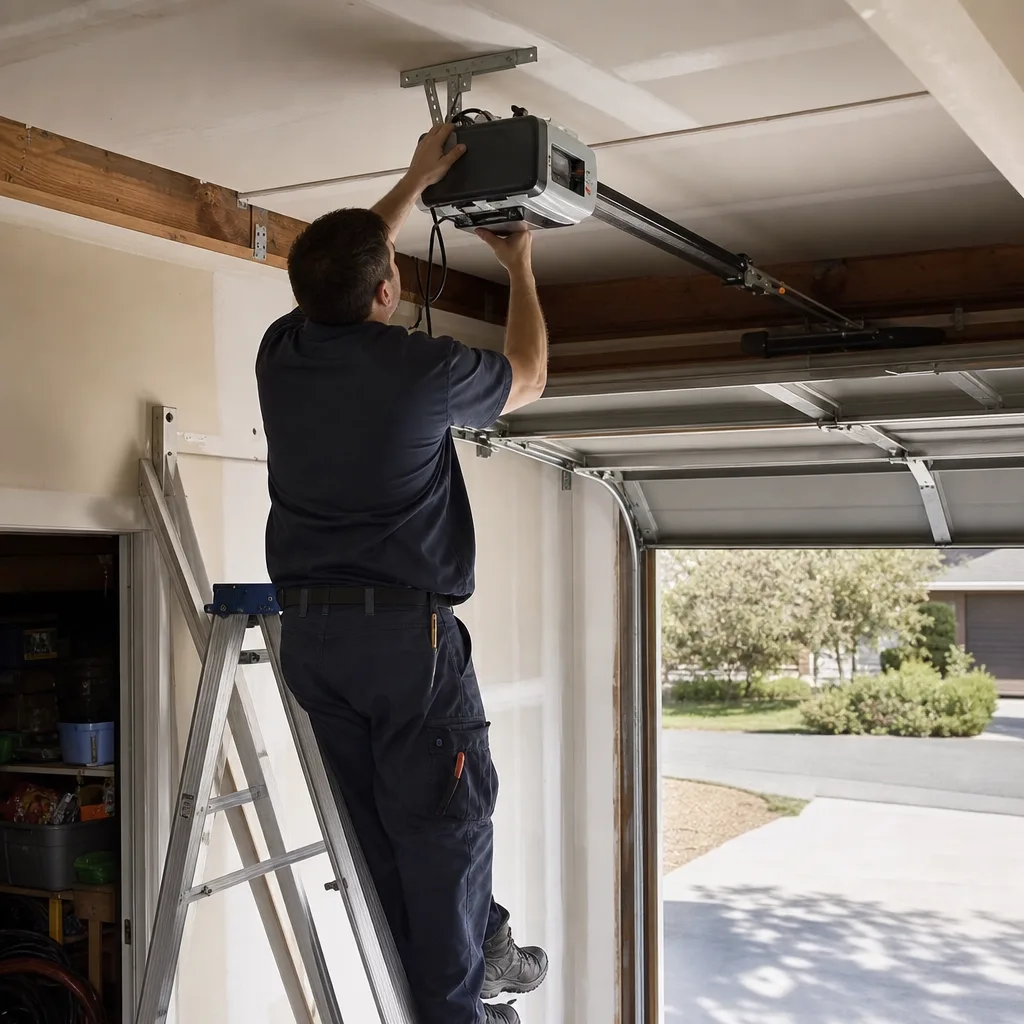
Replacing a garage door in Redmond is a once-in-two-decades decision that rewards methodical preparation. Verify whether your tracks can accept a new panel or require full replacement. Match your material and insulation to our wet climate - polyurethane-core steel for most homes. Spec your opener and door together using actual weight and torque calculations, not guesswork. Understand your HOA’s documentation requirements before ordering. And demand written, flat pricing with documented evidence of what was found and what was done. The market has changed since your last purchase. The standards for how you’re treated shouldn’t have to.
Written by Marcus Deller, Owner at Servo Garage Doors Redmond, serving Redmond since 2015.