
Last updated September 21, 2026
Full 25-point door and opener safety check with every visit - springs, cables, rollers, tracks, and your LiftMaster or Chamberlain opener included
You get a price before we start. It does not change when the truck arrives.
 Before
 After
After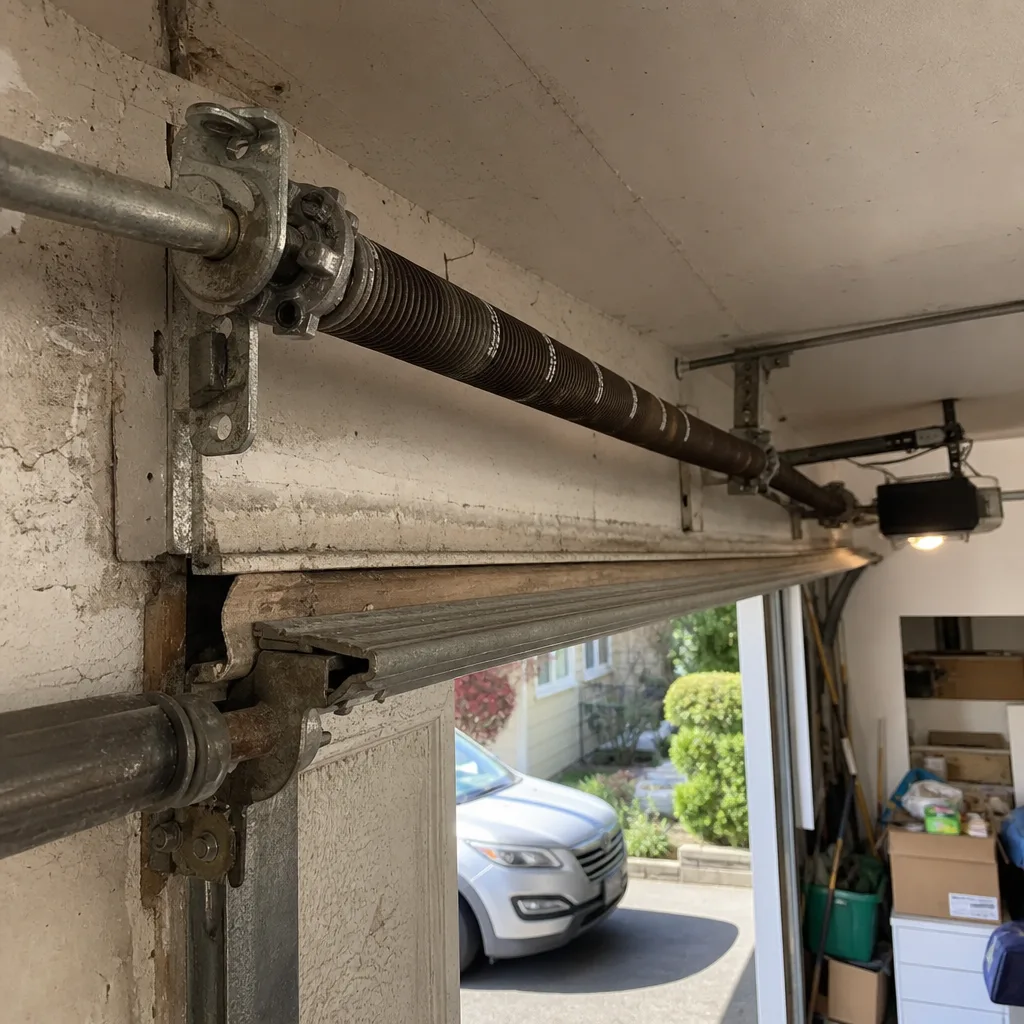 Before
 After
After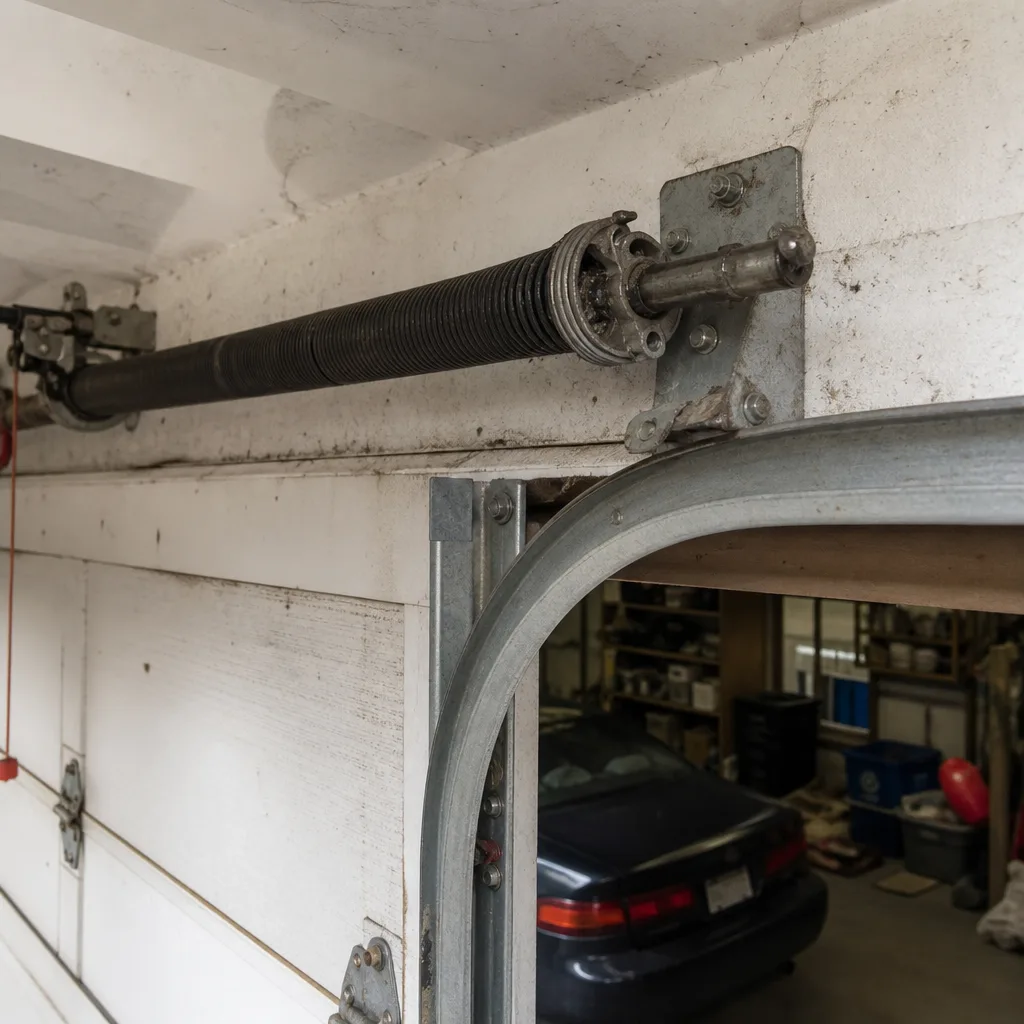 Before
 After
AfterGarage Door Warning Signs: A Redmond Homeowner’s Reference Guide
Most garage door warning-sign lists tell you to “listen for strange noises” and “watch for slow movement.” That’s not wrong, but it’s not useful either. A grinding sound and a popping sound implicate entirely different components, carry different price tags, and pose different safety risks. In Redmond, where moisture from the Sammamish River valley accelerates rust on hardware and temperature swings stress torsion springs through repeated expansion cycles, the same symptom can mean different things depending on which neighborhood you live in and how old your installation is. This guide names the specific part behind each warning sign, explains the failure mechanism, and tells you whether the door is safe to operate while you schedule repair. For a broader overview of maintenance and installation topics, see our Complete Guide to Garage Door in Redmond.
Quick Answer
A garage door showing warning signs in Redmond typically exhibits one of four symptom categories: noise changes, movement anomalies, visual irregularities, or remote/operator failures. Most warning signs are safe to monitor for a few days, but three specific symptoms - a visible gap in a torsion spring, a cable off the drum, or a door that won’t stay closed - mean stop using the door immediately and call a technician. The underlying component, its failure mode, and the repair cost range are all identifiable before anyone touches the door.
Table of Contents
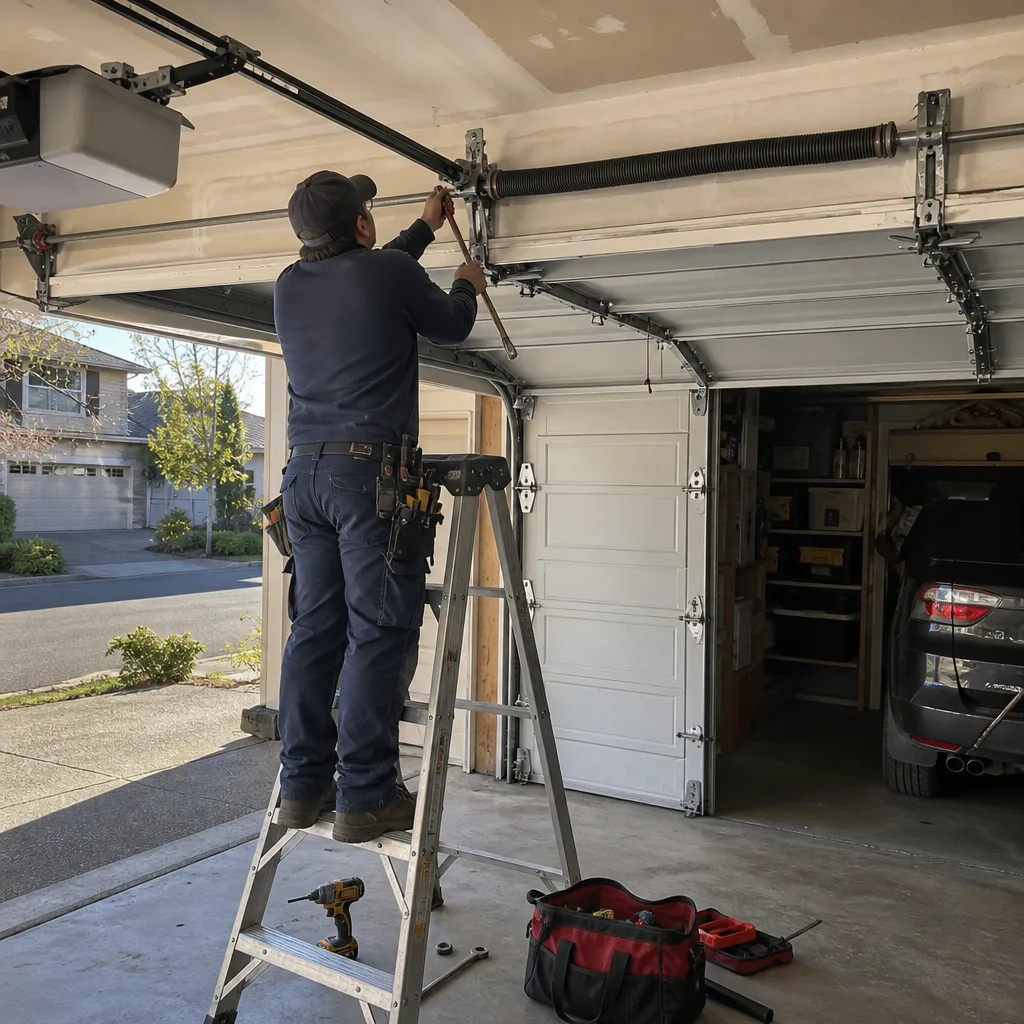
- Noise Classification: What Each Sound Means
- Movement Anomalies Decoded
- Visual Indicators You Can Check From the Floor
- Operator and Remote Issues
- Operate or Don’t Operate: Safety Guidance for Each Symptom
- What to Document Before Calling a Technician
- Redmond-Specific Factors That Accelerate Wear
- Common Mistakes to Avoid
- When to Call a Professional
- Frequently Asked Questions
 Before
 After
AfterNoise Classification: What Each Sound Means
Not every loud garage door is the same problem. The acoustic signature points to a specific component, and that component points to a specific price range. Here’s how we classify what we hear on service calls across Redmond, from Education Hill to Bear Creek.
Grinding Sound
A continuous metal-on-metal grind typically means a roller bearing has seized or a hinge pin has worn through its bushing. Steel rollers with unsealed bearings collect road grit and moisture; in Redmond’s wet winters, we’ve seen bearings fail in as little as four years on doors facing west toward the Sammamish Valley. The roller still rolls, but it slides part of each rotation, producing that grind.
Component: Roller bearing or hinge bushing
Safe to operate: Yes, with monitoring, but the grinding accelerates track wear
Typical repair range in Redmond: $140-$280 for roller replacement on a standard 16×7 door; hinge replacement runs $85-$160 per hinge if the pin has scored the bracket
What worsens it: Continued operation without lubrication, misaligned track forcing the roller to climb one side
We replace failed rollers with sealed-bearing nylon rollers on most Redmond jobs. They don’t rust, they don’t grind, and they don’t require annual greasing. The price difference is $8-$12 per roller versus $3-$5 for steel, but the sealed bearing pays for itself in reduced track wear and noise.
Popping Sound
A single loud pop, often followed by a door that suddenly feels heavier or won’t stay open, is a torsion spring breaking. The sound is distinctive: one sharp crack, like a heavy book dropped on a wooden floor. The spring stores mechanical energy equivalent to lifting the door’s full weight; when it breaks, that energy releases instantly.
Component: Torsion spring (the coiled spring above the door header)
Safe to operate: No. The door is now unbalanced and may crash if released
Typical repair range in Redmond: $220-$380 for standard single-spring residential doors; $340-$520 for heavier two-spring systems on insulated or oversized doors
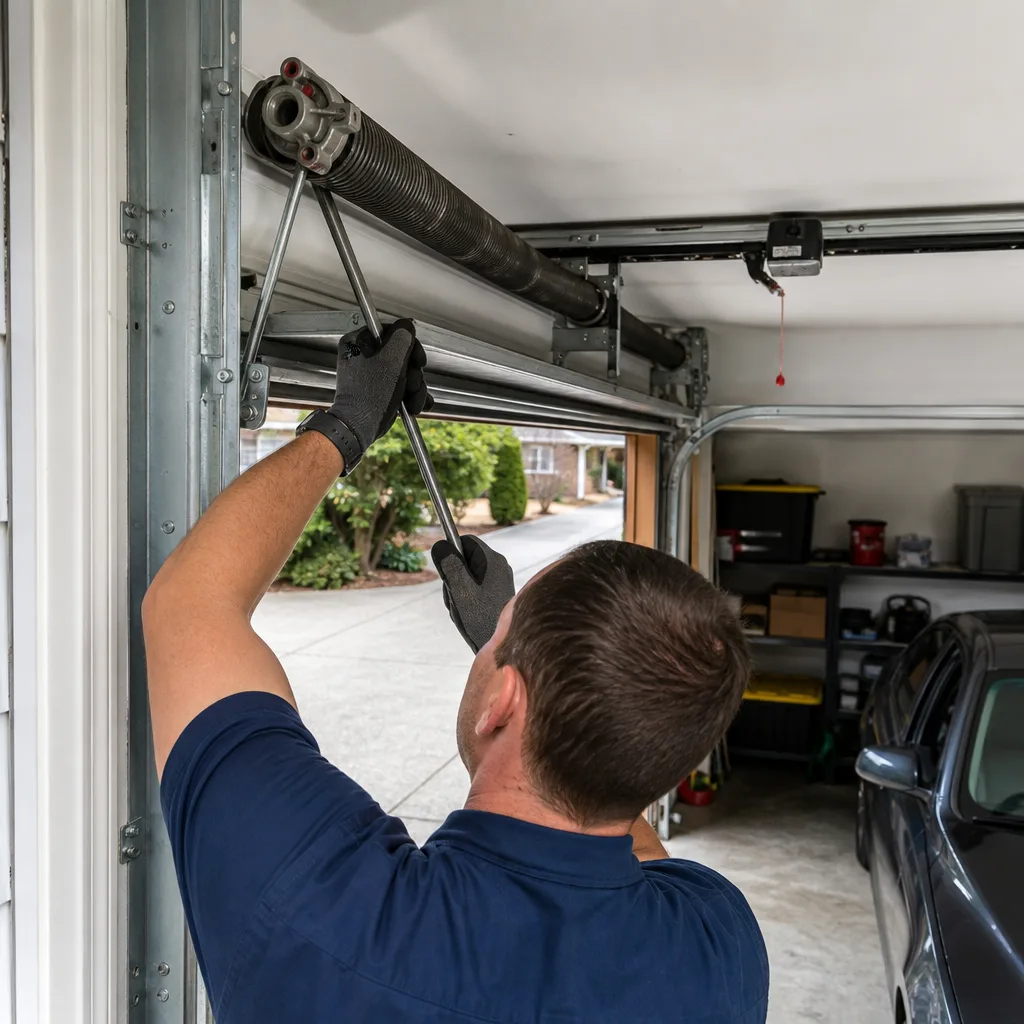
Critical detail: Never disconnect the opener and try to lift manually. The door weighs 150-250 pounds without spring assist, and the emergency release doesn’t restore balance.
In our experience serving Redmond since 2015, spring failures spike in March and October. The temperature swing from 35°F nights to 55°F days cycles the steel through expansion and contraction. Springs in south-facing garages, where daytime temperatures climb higher, show more fatigue at the coil ends.
Rattling or Vibrating Sound
Intermittent rattling, especially at certain points in the door’s travel, usually means loose hardware. The nuts on roller brackets and track supports back out over time from vibration. On older Raynor and Craftsman doors common in Redmond’s 1980s-era neighborhoods, the original fasteners were often not installed with thread-locking compound.
Component: Roller bracket nuts, track support bolts, or opener rail mounting hardware
Safe to operate: Yes, but inspect weekly; a loose bracket can twist and jam the door
Typical repair range in Redmond: $95-$175 for hardware tightening and inspection; if brackets have elongated holes from movement, replacement runs $140-$260
DIY check: With the door closed, visually inspect each roller bracket for gaps between nut and bracket. Don’t tighten anything yourself - the torsion spring is under load and the bracket is part of that system.
Squealing or Screeching
High-frequency squeal on opening or closing points to metal-on-metal contact without adequate lubrication. On LiftMaster chain-drive openers, which we see frequently in Redmond’s newer construction, the chain-to-rail interface dries out. On screw-drive Genie units, the carriage threads need periodic lubrication with specific compound, not WD-40.
Component: Opener drive mechanism or door hinge/roller interfaces
Safe to operate: Yes, but the squeal indicates accelerated wear
Typical repair range in Redmond: $85-$150 for lubrication service; $240-$420 if the dry operation has worn the chain or carriage beyond adjustment
Movement Anomalies Decoded
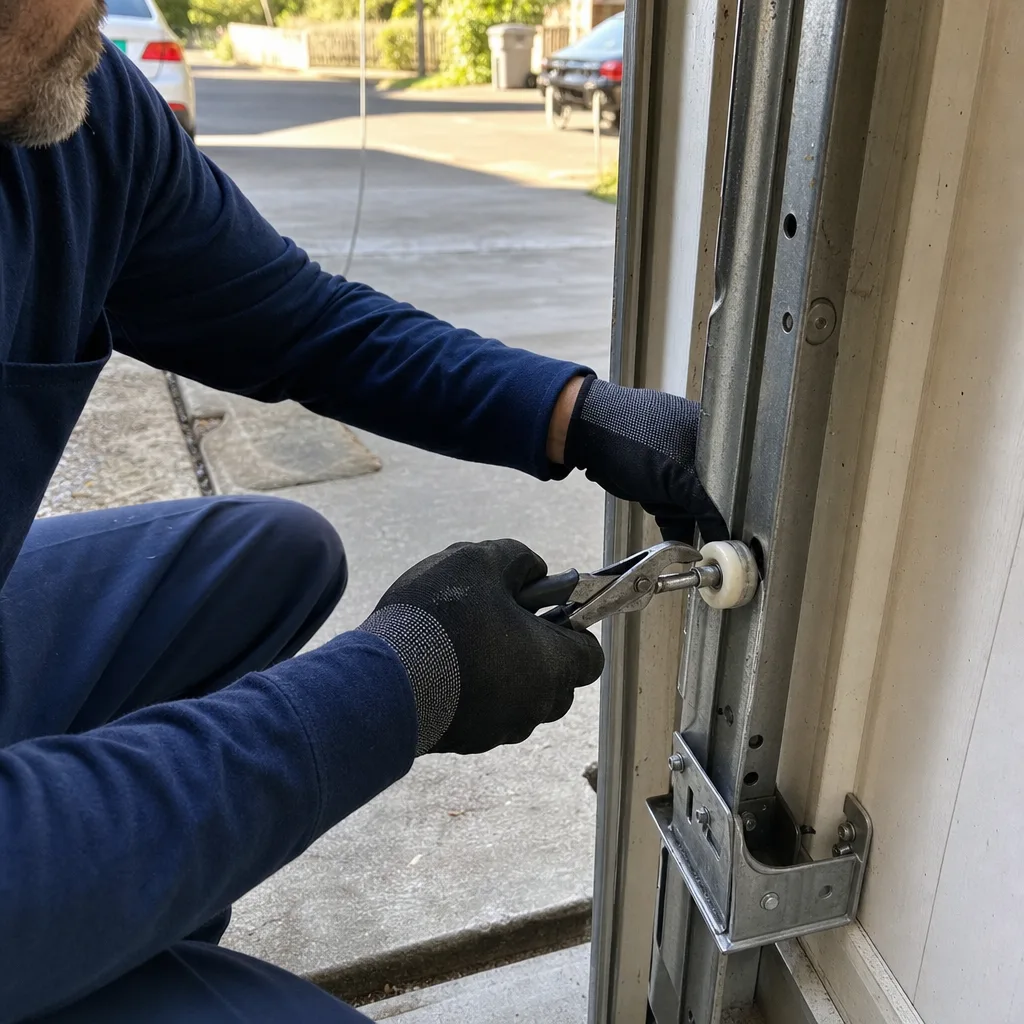
A door that doesn’t move correctly is telling you something specific. The direction of the anomaly, the point in travel where it occurs, and whether the opener labors or gives up all point to root causes.
Door Opens Unevenly (One Side Higher Than the Other)
When the left side of the door rises faster than the right, or vice versa, the lift system is unbalanced. In a torsion spring system, this means one of the cables has slipped on its drum or the spring has a partial failure (one coil broken while others hold). In older extension spring systems, still found in some Redmond homes built before 1993, one spring may have stretched beyond its pair.
Component: Lift cable, drum, or spring system
Safe to operate: No. The door is twisting in its tracks, which damages rollers and can derail the door
Typical repair range in Redmond: $180-$320 for cable reattachment and drum inspection; $260-$480 if the spring requires replacement to restore balance
We’ve responded to calls in the Overlake area where homeowners operated an uneven door for weeks, gradually bending the vertical track until the door jammed completely. The initial cable fix became a track replacement, adding $340-$520 to the job.
Door Reverses Before Hitting the Floor
A door that reaches knee height and immediately returns to open has one of three causes: photo-eye misalignment, close-force setting too sensitive, or mechanical binding that the opener interprets as obstruction. The photo-eye issue is most common in Redmond’s leaf-heavy fall season, when debris blocks the infrared beam.
Component: Photo-eye sensor pair, opener logic board force setting, or track/roller obstruction
Safe to operate: Yes, with the wall button held down (bypasses the photo-eye circuit), but only as temporary measure
Typical repair range in Redmond: $0-$85 for photo-eye cleaning and realignment (we don’t charge if that’s all it is); $140-$260 for force limit recalibration or sensor replacement; $180-$340 for track obstruction removal
The photo-eye system is straightforward: two sensors, one transmitting infrared light, one receiving it, mounted 4-6 inches above the floor on each side of the door. If the receiver doesn’t see the transmitter, the opener won’t close. In Redmond, where Douglas fir needles drop heavily in October and November, we see this call spike predictably. Clean the lenses with a dry cloth. If the LED on one sensor is out or blinking, the alignment is off.
Door Opens But Won’t Close
Complete refusal to close, with the opener clicking or humming but no movement, typically means the opener’s logic board has detected a fault and entered protect mode. The cause may be the same as the reversal issue, but more severe, or it may indicate a failed limit switch that can’t tell the opener where the door is in its travel.
Component: Limit switch, logic board, or safety sensor circuit
Safe to operate: The door is already open, so security is the concern; disconnect the opener and lock the door manually
Typical repair range in Redmond: $160-$280 for limit switch or sensor replacement; $340-$580 for logic board replacement on older units; $520-$890 for full opener replacement if the unit is obsolete
On Garage Door Opener Repair & Installation in Redmond calls, we carry diagnostic equipment that reads the fault code from LiftMaster, Chamberlain, and Genie logic boards. The code tells us whether it’s a sensor, switch, or board failure before we quote anything. Clause 4 of The Haven Standard requires we photograph the diagnostic readout and include it in your documented photo record.
Door Closes But Won’t Stay Closed
A door that reaches the floor and immediately rebounds open, or drifts up several inches after appearing to settle, has a spring system that’s providing too much lift force relative to the door weight. This is common after a DIY spring replacement with the wrong wire size or length, or when a door has been modified (insulation added, windows installed) without recalibrating the springs.
Component: Torsion or extension spring system (wrong size or worn)
Safe to operate: No. The door cannot be secured and may damage the opener drive
Typical repair range in Redmond: $240-$420 for spring recalculation and replacement; $85-$150 additional if the door weight has changed and needs rebalancing
Visual Indicators You Can Check From the Floor
You don’t need to touch anything to gather useful information. These checks take two minutes and produce evidence that accelerates accurate quoting.
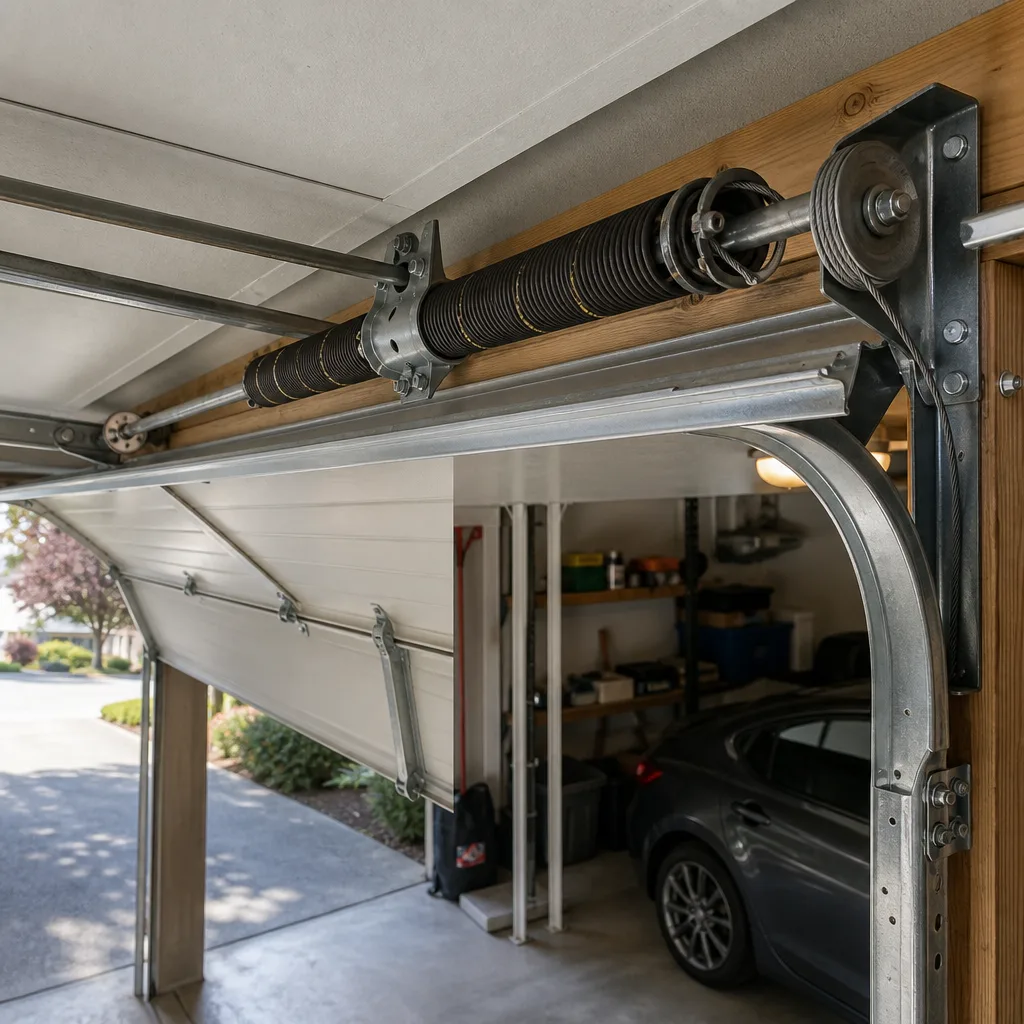
- Cable position relative to the drum. Look at the drum, the grooved wheel at each end of the spring shaft above the door. The lift cable should sit neatly in the grooves, winding from the outside toward the center as the door rises. If a cable is bunched at one end of the drum, off the drum entirely, or frayed with visible strands separating, that’s a cable or drum issue. Photograph it from directly below and from a 45-degree angle.
- Gap between door sections. Stand inside the garage with the door closed and the overhead light on. Look for daylight between sections. A gap means a failed section hinge, impact damage, or panel delamination. On insulated steel doors, the gap may show the foam core. Note which section number (count from bottom) and whether the gap is uniform or tapered.
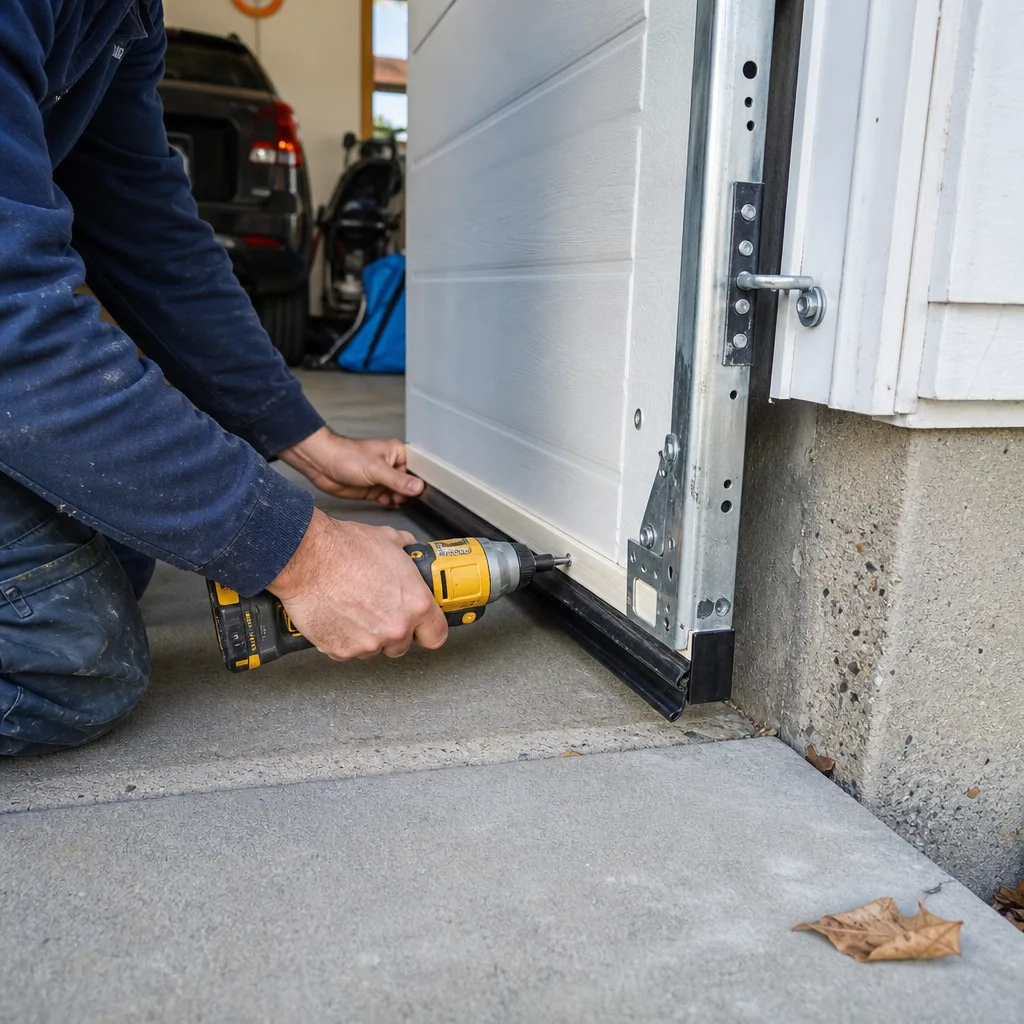
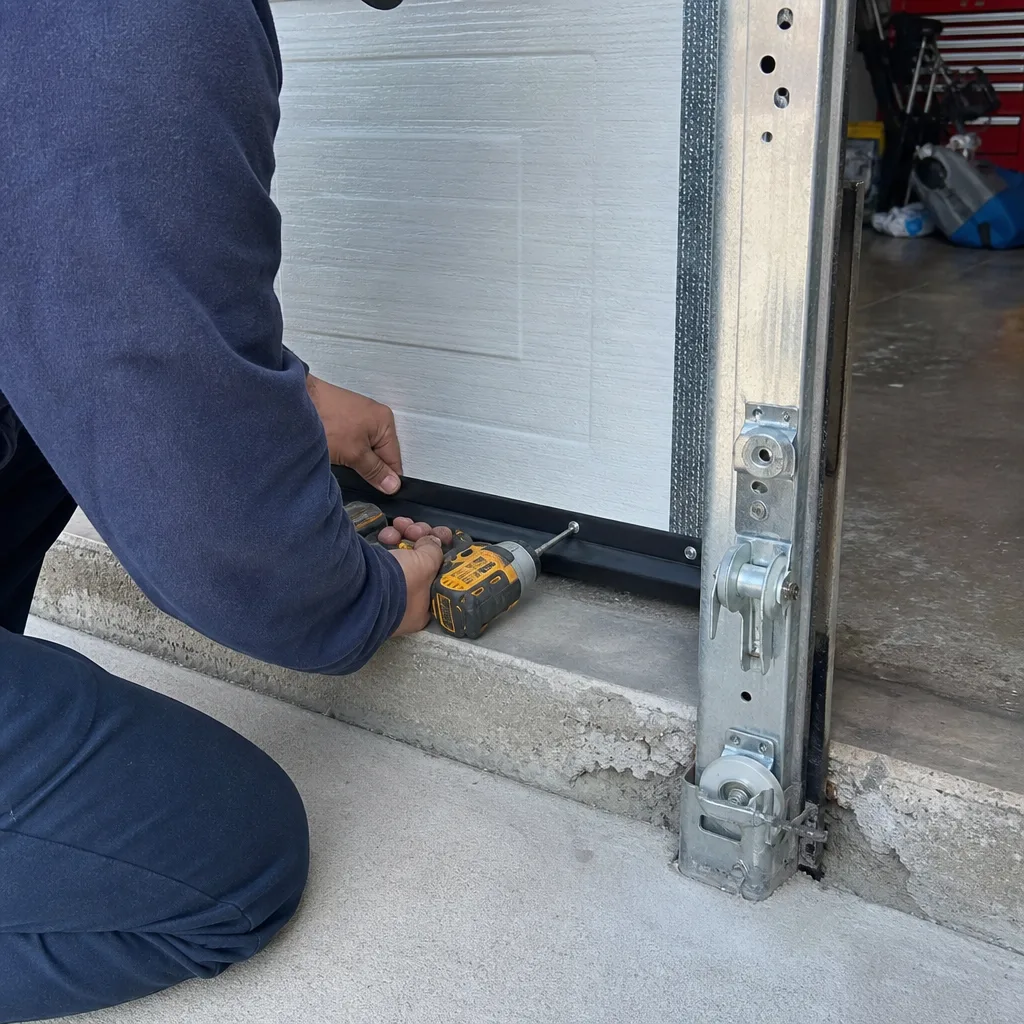
- Gap between bottom seal and floor. The rubber or vinyl seal should contact the floor across the full width. A gap on one side suggests settled concrete or a twisted door; a gap in the center suggests a bowed bottom section or worn seal. In Redmond’s older neighborhoods like Downtown and Grass Lawn, garage slabs settle differentially over the clay soils. The seal gap lets in water during fall storms and rodents year-round.
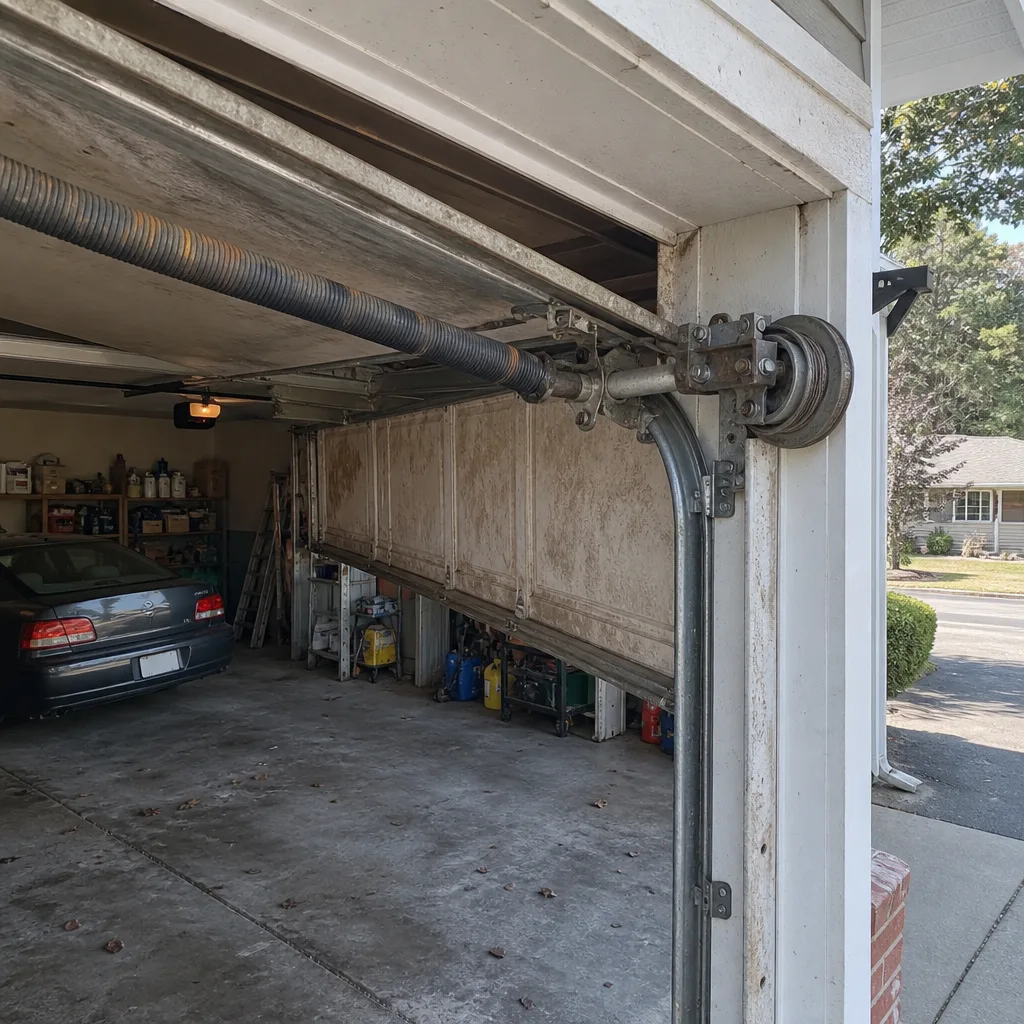
- Spring coil integrity. Look at the torsion spring above the door. A visible gap between coils, typically 2-4 inches, means one coil has broken. The spring may still function partially, but it’s unpredictable. Do not stand directly beneath it. Photograph from the side, not from underneath.
- Track mounting bracket condition. The brackets that attach the vertical track to the wall should be straight, with all bolts present. A bent bracket or missing bolt means the track has shifted and the door is running out of plumb.
These five observations, photographed and sent to us, let us quote accurately before dispatching. They also protect you from upsells: if you have clear evidence of a cable off the drum, no technician can credibly claim you need a full door replacement.
Operator and Remote Issues
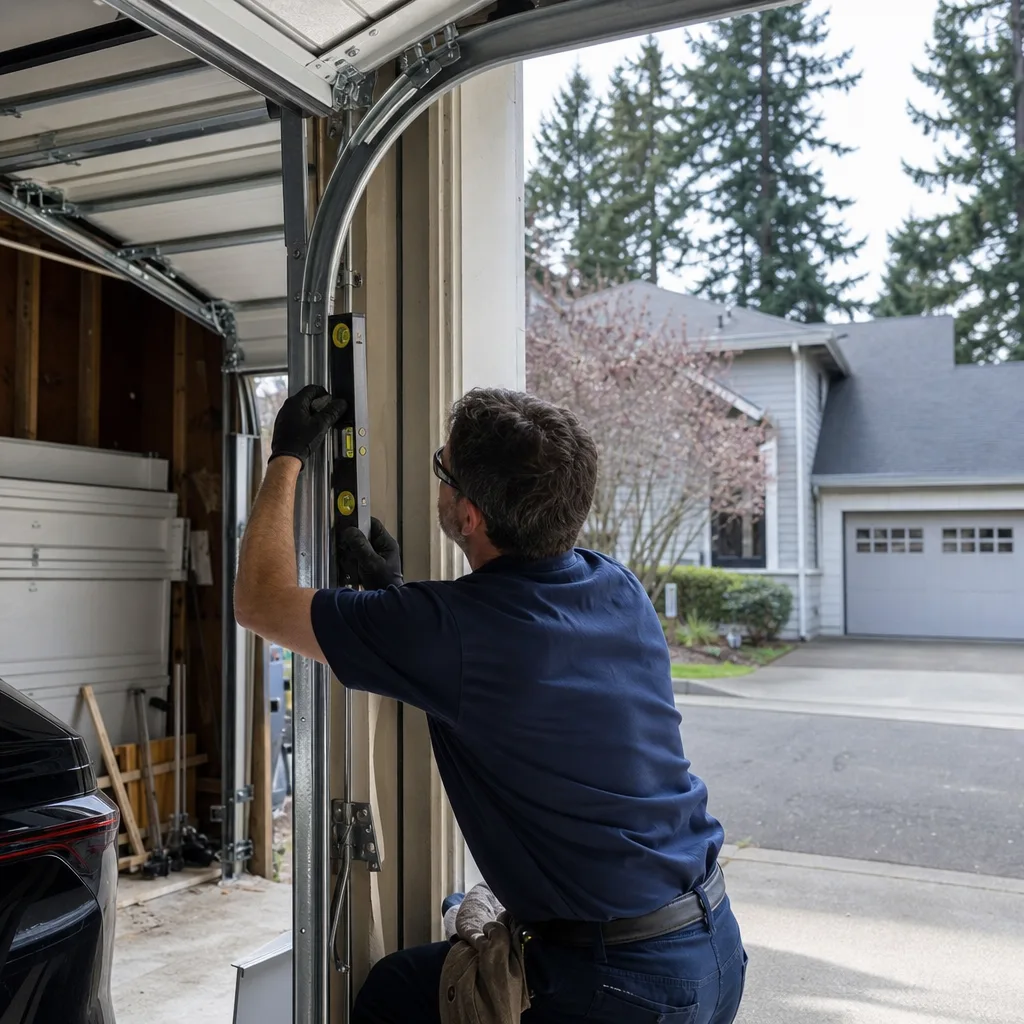
Not every warning sign involves the door itself. The operator - the motorized unit mounted to the ceiling - has its own failure modes, and they often present before the door shows symptoms.
Remote Works Intermittently or Only at Close Range
This is almost never the remote battery, though that’s the first thing homeowners replace. In Redmond’s dense WiFi environment, especially in the tech-corridor neighborhoods near Microsoft, 2.4 GHz interference from mesh networks, baby monitors, and wireless security cameras can drown out the remote’s signal. More commonly, the receiver logic board’s antenna connection has loosened or the board itself is failing.
Component: Logic board receiver or antenna
Safe to operate: Yes, with the wall button
Typical repair range in Redmond: $140-$260 for antenna repair or receiver module; $340-$580 for full logic board replacement
Before calling, test the wall button. If the wall button works reliably and the remote doesn’t, the problem is in the radio path, not the motor or door. If both are intermittent, suspect the logic board or the door’s mechanical resistance triggering the opener’s overload.
Opener Light Flashes But Door Doesn’t Move
Most openers flash the overhead light in a coded pattern when they detect a fault. Chamberlain and LiftMaster units flash once for a sensor issue, twice for an open limit fault, four times for a sensor misalignment, five times for motor overheating. The pattern is in your owner’s manual or searchable by model number.
Component: Varies by flash code
Safe to operate: Not until the fault is identified; repeated attempts can damage the motor
Typical repair range in Redmond: $85-$340 depending on component; motor replacement runs $420-$680
Motor Runs But Door Doesn’t Move
The trolley carriage, which connects the motor’s drive mechanism to the door arm, may have stripped its internal gears or disengaged from the screw/chain/belt. On Craftsman chain-drive units from the 2000s, still common in Redmond’s established neighborhoods, the nylon gear inside the trolley wears until it spins without engaging.
Component: Trolley carriage or drive gear
Safe to operate: No; the door is disconnected from the operator and may fall
Typical repair range in Redmond: $160-$280 for trolley replacement; $240-$420 if the drive gear in the motor head is also damaged
Operate or Don’t Operate: Safety Guidance for Each Symptom
This is the decision homeowners need to make before scheduling. Here’s our guidance based on 18,000+ service calls since 2015. For more guides & resources on garage door maintenance and repair, visit our blog.
Stop Using Immediately - Park Outside
- Visible gap in torsion spring. The remaining spring coils are under unpredictable load. The door may crash, and the broken end can whip. We’ve seen broken springs damage cars, garage contents, and in one Redmond case, the door itself when it fell off the track.
- Cable off the drum or visibly frayed. The door is supported on one side only. Operating it twists the door in the track, which bends the track and damages rollers. A frayed cable can snap under load.
- Door won’t stay closed. Security risk and opener damage risk. The constant strain of holding a partially open door burns out the motor.
- Door has come out of the track. Never attempt to force it back in. The track geometry is precise; forcing it bends the track and damages rollers.
Safe to Use With Monitoring - Schedule Within a Week
- Grinding roller or hinge. Noise is annoying and accelerates wear, but the door is structurally sound. Avoid operating more than necessary until repaired.
- Photo-eye reversal. You can hold the wall button to close as a temporary measure, but the safety system is compromised. A child or pet in the door path won’t trigger reversal.
- Remote range reduction. Inconvenience only, until it fails completely.
- Bottom seal gap. Energy and pest issue, not structural. Monitor for water intrusion during storms.
Safe to Use - Schedule at Convenience
- Cosmetic panel damage. Doesn’t affect operation unless the panel is bent enough to bind in the track.
- Minor paint peeling or rust spots. Address before rust penetrates the steel, but not urgent.
- LED bulb interference with remote. Some LED bulbs emit RF noise in the remote frequency. Replace with garage-door-rated LED or incandescent.
What to Document Before Calling a Technician
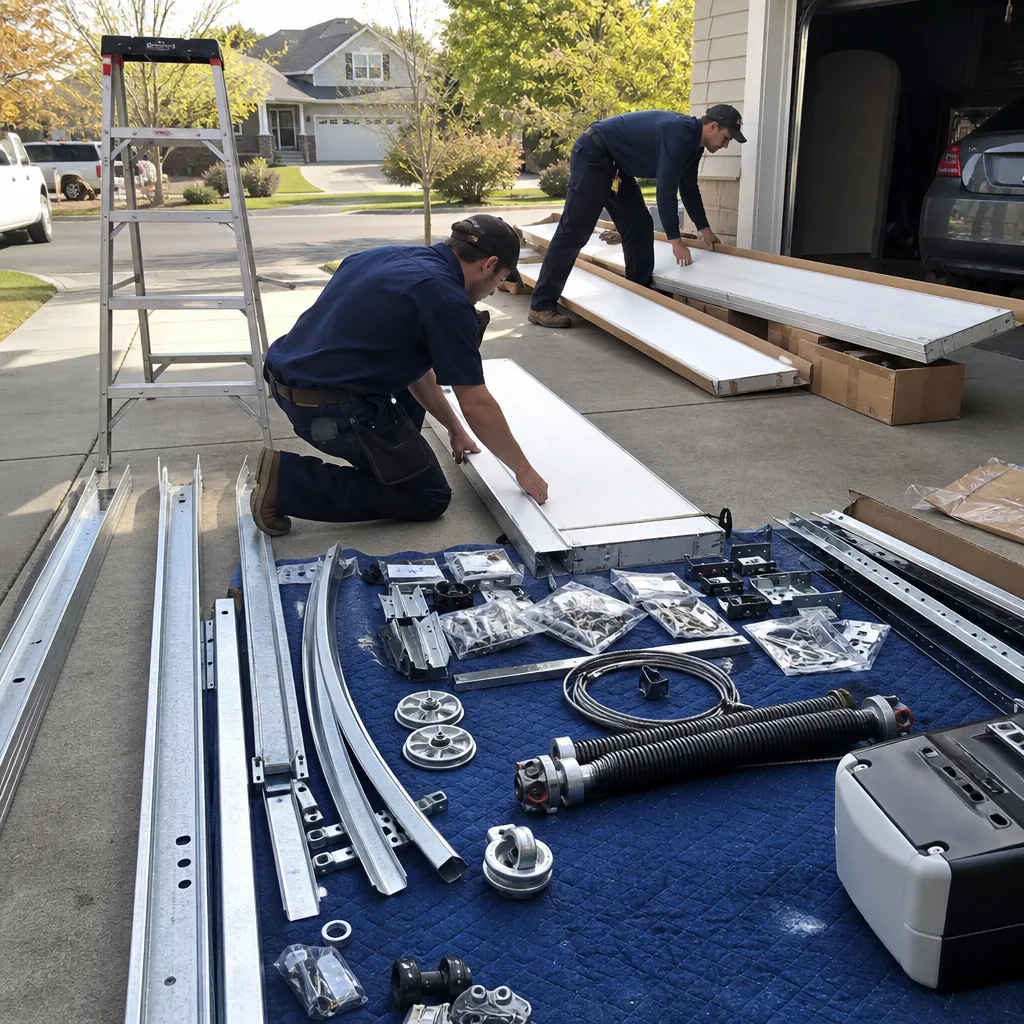
The photo record you create before we arrive makes the service call more efficient and protects you from unnecessary work. Here’s what to capture and why it matters.
- Wide shot of the full door, closed, from inside the garage. Shows panel condition, alignment, and any obvious damage. We compare this to what we find on arrival.
- Close-up of the torsion spring assembly from the side. Shows coil spacing, rust level, and whether it’s a single or dual spring system. This determines whether we bring the right springs on the first trip.
- Cable and drum on each side. Shows cable condition and drum position. If one cable is off, we know to inspect the drum for scoring.
- Photo-eye sensors and their LED indicators. Shows whether they’re lit, blinking, or dark, and whether anything obstructs the path.
- Opener model number plate. Usually on the side or back of the motor unit. Lets us pull the wiring diagram and parts list before arriving.
- Any error codes or flashing patterns. Video is better than photo for this; a 10-second clip of the light pattern saves diagnostic time.
Send these to us when you call. We quote from them, per Clause 1 of The Haven Standard: written price and written scope before any work starts. The technician then creates a second photo record - the documented record of what was found and what was done - which you receive at job completion. Two photo records: yours, establishing the baseline; ours, establishing what changed. That’s how “trust us” becomes unnecessary.
Redmond-Specific Factors That Accelerate Wear
Redmond’s environment creates specific stress patterns that show up in our service data.
Moisture and rust. The Sammamish River valley and the proximity to Lake Sammamish mean higher ambient humidity than Seattle’s average. Unsealed steel rollers and hinges rust faster. We see more roller replacements in Redmond’s lower-elevation neighborhoods - Downtown, Grass Lawn, parts of Overlake - than in the hill areas like Education Hill or North Redmond. The difference is measurable in service records: average roller life of 6-7 years in the valley versus 9-10 years at higher elevation.
Temperature cycling. Redmond’s inland location produces wider daily temperature swings than coastal Seattle. A garage facing south with poor insulation can see 40°F internal temperature variation in March. That cycles the torsion spring through expansion and contraction, accelerating metal fatigue at the coil ends where stress concentrates. Spring failures in Redmond cluster in early spring and late fall, not mid-winter when temperatures stay consistently cold.
Soil settlement. The glacial till and clay underlying much of Redmond settles differentially, especially in areas with fill soil from development. Garage slabs tilt. A door that sealed perfectly in 2018 may show a bottom seal gap in 2024 not because the seal wore, but because the slab dropped 3/8 inch on one corner. We measure with a level and quote slab adjustment or a custom seal profile, not just a rubber replacement.
Tree debris. Redmond’s mature Douglas fir and western red cedar drop needles, cones, and pollen that clog photo-eye lenses and track grooves. Fall service calls for “door won’t close” spike 40% in October. The fix is usually free - clean the lenses, clear the track - but homeowners who don’t know to check waste a day waiting for a technician.
Power quality. The Redmond electrical grid, like much of the Eastside, experiences brief outages and voltage sags during winter storms. These can corrupt the logic board memory in older openers, causing erratic behavior that looks like mechanical failure. A simple logic board reset, documented in the owner’s manual, resolves it. We walk customers through this by phone when appropriate, even when it means no service call.
Common Mistakes to Avoid
- Ignoring a single loud pop and continuing to operate the door. In Redmond’s Bridle Trails neighborhood, we responded to a call where the homeowner heard the pop, assumed it was the opener, and used the door for three more days. The unbalanced load bent the top section and damaged two rollers, turning a $280 spring job into a $740 repair.
- Applying WD-40 to rollers, hinges, or the opener chain. WD-40 is a solvent, not a lubricant. It displaces water temporarily, then evaporates, leaving metal drier than before. On chain-drive openers, it attracts grit that accelerates wear. Use lithium grease on metal-to-metal joints, silicone spray on plastic rollers, and the manufacturer-specified compound on screw drives.
- Adjusting the opener force settings to compensate for a mechanical problem. When the door gets heavy due to spring fatigue, homeowners sometimes crank up the opener’s down-force setting to make it close. This overrides the safety system. The door will close on an obstruction with lethal force. Fix the spring, don’t bypass the safety.
- Replacing only one spring on a two-spring system. Matched spring pairs fatigue together. Replacing one means the new spring carries more load than the old, unevenly. We replace both, with the wire size and length calculated for the specific door weight. The price difference is the cost of one spring; the life difference is years.
- Calling for “a tune-up” without specifying symptoms. Vague requests lead to vague scopes. Tell us what you see, hear, and when it happens. “Grinding sound on the third section from bottom, only when opening, started two weeks ago” gets you a precise quote. “Door is noisy” gets you a range.
- Accepting a verbal quote over the phone without written confirmation. Clause 1 of The Haven Standard exists because verbal quotes change. The written price and scope, delivered before work starts, is your protection. If a technician won’t put it in writing, the price isn’t real.
- Not checking whether the technician’s license is current and specific to garage door work. In Washington, garage door contractors need a specialty contractor license. The number should be on the website, not buried in fine print. Servo’s license is displayed on every page and on the technician’s uniform. Ask others why theirs isn’t.
When to Call a Professional
Call when a symptom appears that you can’t explain with a two-minute visual check. Call when the door behaves differently than it has for the past year. Call when a safety system - photo-eyes, auto-reverse, emergency release - isn’t functioning as designed. Call before the symptom becomes a failure, because scheduled service costs less than emergency response and carries no after-hours premium.
For Garage Door Repair in Redmond, Servo Garage Doors Redmond home offers free estimates with written pricing before any work begins. We’re live on the phone 24 hours a day, including holidays, and emergency calls get a named technician and an on-the-way text, not a callback window. Reach us at (425) 305-4847.
Frequently Asked Questions
Single torsion spring replacement in Redmond typically runs $220-$380; dual-spring systems on heavier doors range $340-$520. The price depends on wire diameter, coil length, and whether the door requires recalibration after spring replacement. We quote the exact price after measuring the door weight and existing spring, per Clause 1 of The Haven Standard. Call (425) 305-4847 for a free estimate - no coupon required.
You can perform visual checks and basic maintenance - cleaning photo-eye lenses, testing the auto-reverse with a 2×4, listening for noise changes. Never attempt to adjust, repair, or replace torsion springs, cables, or opener logic boards yourself. The torsion spring stores enough energy to cause serious injury or death; cable snap can lacerate; electrical work on openers requires knowledge of lockout procedures. Our technicians are background-checked, uniformed, and trained on the specific hazards of each component.
No. Clause 1 of The Haven Standard requires a flat, written price and written scope before any work starts. The price we quote is the price you pay. If our inspection reveals additional issues not visible in your photos or description, we document them, explain them, and quote them separately. You approve each scope independently. No surprises, no pressure.
Our phone is answered by a live person 24 hours a day, 7 days a week, including holidays. Emergency calls in Redmond typically receive same-day response, with a named technician and an on-the-way text. For non-emergency symptoms, we schedule within 24-48 hours. Speed language applies to repair and emergency topics; Garage Door Installation in Redmond is measured, ordered, and scheduled, not dispatched.
We stock springs, cables, rollers, hinges, and photo-eye sensors for LiftMaster, Chamberlain, Genie, Clopay, Amarr, Wayne Dalton, Craftsman, and Raynor doors and openers. Our Redmond service trucks carry the 20 most common spring sizes and a full range of hardware. If your door uses an obsolete part, we source it overnight or propose a compatible replacement with your approval. We never begin work without the correct part on hand.
If a repair is not right, we make it right - no argument, no additional charge, no expiration within the year. The promise is documented in your service record, not a handshake. It’s backed by The Haven Standard and a terms page you can reference. In 18,000+ jobs since 2015, our callback rate is low enough that we publish the promise without reservation. The documentation system that supports it - Clause 4’s photo record, Clause 1’s written scope - is why we can offer it.
The Bottom Line
Garage door warning signs are specific, not mysterious. The sound, the movement, the visual irregularity - each maps to a component, a failure mechanism, and a repair range. In Redmond’s climate, moisture and temperature cycling accelerate certain failures, but they don’t change the diagnostic logic. Document what you see, know which symptoms mean stop operating immediately, and demand written pricing before any work starts. The evidence speaks first, and the right technician will welcome that standard.
Written by Marcus Deller, Owner at Servo Garage Doors Redmond, serving Redmond since 2015.